Get Full Government Meeting Transcripts, Videos, & Alerts Forever!
Get email alerts on the Teacher Recruitment topic
No spam. Unsubscribe anytime.
Teachers, residents urge stronger recruitment and transparency; board holds first readings on leave and job-sharing policies
Summary
Public speakers at the June 10 Cartwright board meeting urged new approaches to teacher recruitment and retention and pressed the board for transparency on consulting fees; the board held first readings of three personnel policies including a job-sharing policy intended to expand hiring options.
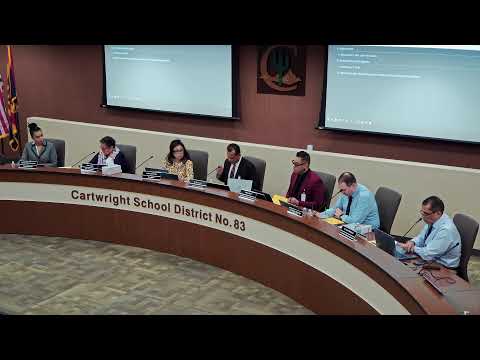
At the Cartwright Elementary School District board meeting on June 10, teachers and residents used the public-comment period to press the district on teacher recruitment, retention and budget transparency, while the board moved forward with first readings of personnel-policy changes aimed at staffing flexibility.
Don Schwab, a 27-year teacher and district alumnus, told the board that recruiting strategies should go beyond typical fairs and emergency-certification pipelines. He warned that reductions in benefits and salary-step changes have diminished incentives: "we need to look a little deeper and figure out some more ways," he said, urging the board to address compensation and working conditions to retain highly qualified teachers.
District resident Cecilia Moreno raised concerns about superintendent vetting and asked for clarity on consultant payments she named in the meeting: $88,000 to Jacob Chavez and $72,000 to a consultant named Ziko. She asked who approved those expenses and said taxpayers deserve transparency. The president responded that personal attacks would not be permitted during public comment and invited residents to review prior meeting materials for context.
On the policy side, Dr. Ethridge presented first readings of three personnel policies: GCCA (professional support staff sick leave), which revises maximum sick-leave accrual to 120 hours to align with a 5-day, 8-hour schedule; GCCB (annual, emergency and religious leave), proposing an increase from eight to 10 days of accumulated annual leave to preserve equivalence under a 5-day week; and GCGC (job sharing for professional staff), which would formalize job-sharing arrangements that allow two qualified professionals to split a position. Board members asked practical questions—how pairings would be made and whether student learning would be affected—and Dr. Ethridge said job-sharing requires the participating employees to come with a partner to ensure compatibility and avoid added district costs for benefits.
None of the three policies were adopted; all were scheduled for second reading and possible adoption at the June 24 meeting. Public commentators' questions about consulting fees were not resolved in the meeting record and may require follow-up through staff or board inquiry.