Get Full Government Meeting Transcripts, Videos, & Alerts Forever!
Get email alerts on the Economic Development topic
No spam. Unsubscribe anytime.
After reconsideration, council approves Magnolia Grove fee-in-lieu agreement citing prospect for 120+ jobs
Summary
Council voted to reconsider and then approved a fee-in-lieu tax agreement for Magnolia Grove Holdings LLC after the GADC said a manufacturing prospect is lined up and taxes would not go offline until the building reached roughly 80% occupancy.
Following a successful motion to suspend procedural rules and reconsider a May action, Greenville County Council approved at third reading a fee-in-lieu (FIL) agreement for Magnolia Grove Holdings LLC ("Project Magnolia").
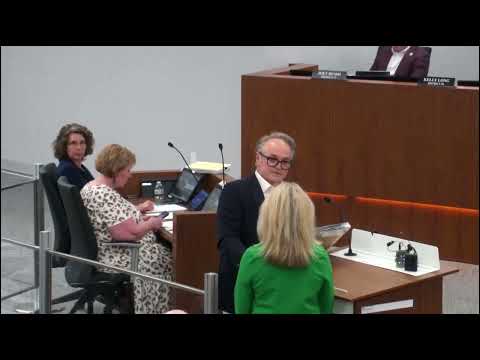
Councilor Seaman moved to reconsider the May 5 vote after the Greenville County Development Corporation (GADC) reported new information indicating a tenant prospect for the speculative building. Max Stewart, GADC president and CEO, told council a prospect is interested and that the FIL agreement is structured to delay tax benefits until the property reaches occupancy thresholds. "We have a prospect in line ... right now it's over 120 or so jobs in the market," Stewart said, and he explained the FIL includes a clause that the tax benefit "doesn't actually go online until it's 80% occupied."
Some councilors pressed for more detail on jobs and terms; finance committee members said they wanted fuller documentation before acting. Council ultimately concluded the new information and the occupancy safeguard justified reconsideration. The ordinance authorizing execution of the fee-in-lieu agreement passed by voice vote.
Councilors and the GADC framed the measure as a tool to protect the county's ability to attract manufacturing tenants to speculative industrial buildings while preserving a tax-collection safeguard until occupancy benchmarks are met.