Get Full Government Meeting Transcripts, Videos, & Alerts Forever!
Get email alerts on the Solar Policy topic
No spam. Unsubscribe anytime.
Commission discusses commercial solar, battery storage and data centers; tables further action
Summary
Commissioners discussed fee structures, inspections, decommission bonds, training needs for volunteer fire departments, tax assessment implications, and road impacts for commercial solar and battery projects. The commission tabled final action pending further research and invited additional expert input.
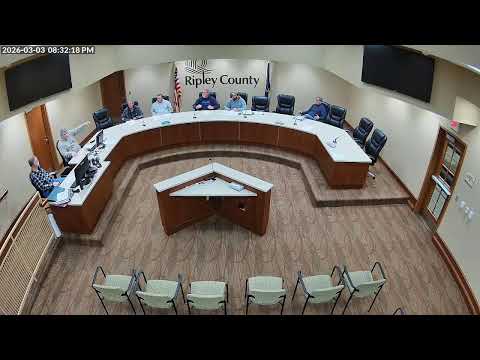
The Ripley County Planning Commission held an extended discussion on commercial solar, battery storage and data‑center projects, centering on how fees, inspections and emergency preparedness should be handled if such developments proceed in the county.
Staff and members reviewed sample fee approaches — tying charges to acreage or megawatt capacity — and suggested an annual inspection fee to help cover periodic compliance checks (one board member proposed roughly $250 per year as an illustrative figure to cover a basic inspection). Commissioners discussed requiring third‑party technical inspections for battery systems to avoid imposing unfamiliar duties on county building staff and noted that statute and NFPA standards require training and emergency coordination for battery installations.
The panel also reviewed recent state assessment figures discussed during the meeting (examples cited for discussion: central region assessments around $26,141 per acre, south region around $20,000 per acre) and raised questions about tax exemption scenarios, decommissioning bonds, roadway repair bonds for construction impacts, and whether specific firefighting equipment or training expenses should fall to developers. Several members recalled that Ripley County commissioners have recently placed a moratorium on commercial solar, battery and data centers; after deliberation, the planning commission voted to table further action on fee schedules and ordinance language and asked staff to pull together additional research and invite a fire‑safety/NFPA expert to a future meeting.
The item was tabled to allow staff to consult the county commissioners’ moratorium language, draft fee options that account for inspections and decommissioning and provide clearer guidance on how tax assessments and potential exemptions would affect local revenue.