Get Full Government Meeting Transcripts, Videos, & Alerts Forever!
Get email alerts on the Water Quality topic
No spam. Unsubscribe anytime.
Local water‑quality group urges Bourne to tighten rules for cesspools, shorten replacement window
Summary
Representatives of the Picassid Water Quality Coalition urged the Bourne Board of Health to move faster on replacing failed cesspools and to require retrofit nitrogen‑removal systems in areas that may become nitrogen‑sensitive.
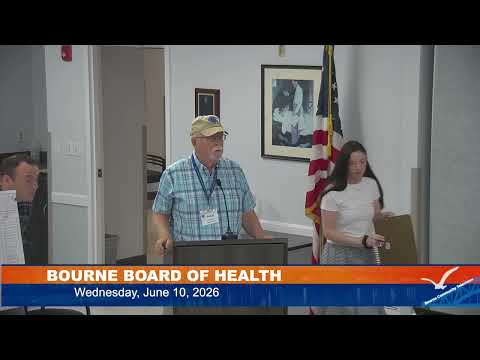
Representatives of the Picassid Water Quality Coalition told the Bourne Board of Health on June 10 that cesspools are a primary cause of recurring beach closures and urged the board to adopt stricter local rules, including shortening the replacement window for failed cesspools from two years to one and requiring retrofit nitrogen‑removal systems in newly designated nitrogen‑sensitive areas.
Bob Dwire, vice president of the Picassid Water Quality Coalition, said a Total Maximum Daily Load (TMDL) for the local harbor system is being finalized and could lead to a nitrogen‑sensitive designation after state and EPA review. "It has to go through state and EPA approval but probably by a year from now this water body is going to be declared a nitrogen sensitive area," Dwire said, and he said the coalition "may do an initiative petition before town meeting to require in these nitrogen sensitive areas retrofit of nitrogen removal systems."
Keith Barber, the coalition president, said recurring beach closures in early season have been tied to cesspools and that shorter replacement timelines would reduce public‑health risk. Barber pointed to financing options and current rebate programs that can help homeowners defray replacement costs and asked the board to "take the lead on Cape Cod and lower the time to replace cesspool to one year." He said the coalition represents more than 300 members.
Board members acknowledged the public comments and noted that current state rules allow towns to adopt stricter local regulations but that any change would need to align with state authority and local implementation capacity. The board did not take up a new regulation at the meeting but staff said the topic could be tracked as part of the upcoming site‑assignment hearings scheduled to begin in September.
No formal motion or vote on changing replacement timelines occurred at the meeting; presenters said they would follow up with the board.