Get Full Government Meeting Transcripts, Videos, & Alerts Forever!
Get email alerts on the Parks Recreation topic
No spam. Unsubscribe anytime.
Council presses administration on Bayou Country Sports Park master plan, funding and east-side parity
Summary
Councilors pressed parish staff for clearer accounting of money spent and projected on Bayou Country Sports Park, asked where the master plan is posted and whether motel-tax and capital-outlay funds are being used equitably across east-side neighborhood parks; staff said the master plan is online and described a mix of funding sources including capital outlay and CDBG program income.
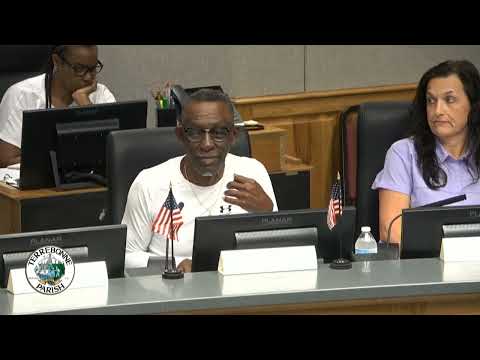
Council members spent extensive time on June 8 pressing staff for clearer answers about funding, timelines and decision-making at Bayou Country Sports Park, the parish’s tournament-focused athletic complex.
Councilman Mr. Harding led the questioning, citing figures in the 2026 budget book that he said raised questions about concessions revenues and projected expenditures. Harding pointed to entries he read from the budget showing concessions-sales figures (about $70,000 actual in 2024 and 2025; $88,000 projected for 2026) and related concession costs and projected revenues in adjacent lines, and asked why numbers appeared inconsistent. He also asked where the park’s master plan could be found and who decides which park projects get priority.
An administration official replied that the Bayou Country Sports Park master plan is posted on the parish website and summarized recent funding activity. The official said the parish has pursued capital outlay funds (approximately $2.1 million referenced for park work), used CDBG program income for related projects, and recently renewed collaborative agreements with local soccer organizers. The reply also noted that some operational expenses for the sports park are covered by revenues (sponsorships, concessions, tournament fees) and that larger capital components historically relied on capital outlay and bond proceeds backed by hotel–motel tax revenues.
Council members repeatedly raised equity concerns. Several representatives said east-side neighborhood parks that the parish recently resumed maintaining need basic amenities — playground equipment, restrooms and modest infrastructure — and urged the administration to balance investments between marquee regional facilities and neighborhood parks. Miss Molden clarified that Malberry Street Park is being maintained under a parish agreement limited historically to grass cutting and trash pickup, with incremental playground improvements added by the parish.
A park representative described early benefits from investments at the sports park, saying turf installations on the girls’ fields produced more tournaments (from five in 2025 to 11 so far this year, including multiple large tournaments). He said the turfing has driven local hotel bookings and restaurant visits, which aligns with the park’s economic-development rationale.
Officials described the way the parish gauges economic impact: working with tourism and economic-development partners to track hotel occupancy and sales tax receipts year over year and comparing event counts and tournament sizes. The administration also said a bathroom project allocated in 2025 required state reallocation of funds and additional documentation before construction could proceed.
The discussion did not produce a new funding allocation or vote; councilors were directed to the master plan online and to continued coordination among planning, public works and the parish president’s office for implementation and any future capital requests.