Get Full Government Meeting Transcripts, Videos, & Alerts Forever!
Get email alerts on the Zoning Regulation topic
No spam. Unsubscribe anytime.
Commission reviews major rewrite of business zoning chapter; debates outdoor dining, storage and parking rules
Summary
Enfield staff and the consultant presented a reorganization of business‑district zoning language that would consolidate footnotes, clarify uses (including treatment of cannabis dispensaries), and add or revise rules on drive‑throughs, outdoor dining, outdoor display and outdoor storage; commissioners debated caps on outdoor seating, seasonal removal of furniture, and limits on outdoor storage.
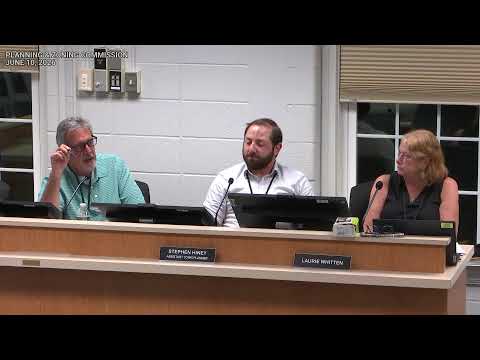
Planning staff and the consultant led commissioners through an extensive reorganization of the business section of the zoning regulations on June 10, explaining that the rewrite consolidates scattered footnotes, updates use tables and clarifies how several uses (drive‑throughs, outdoor display, outdoor storage and outdoor dining) will be handled going forward.
Staff described several substantive changes: clarifying that drive‑throughs will require special permits except in limited Hazardville locations; codifying outdoor dining as an "as‑of‑right" accessory use consistent with state law enacted during COVID; removing outdated minimum building size requirements that the state public act eliminated; and moving agricultural and outdoor display rules into more appropriate sections of the chapter.
Commissioners focused on a few key debates. One discussion centered on outdoor dining limits: the draft retains a provision tying outdoor seating to indoor seating (outdoor seating not to exceed 50% of indoor seating) but commissioners questioned a rule requiring all outdoor tables, chairs and umbrellas be removed at the end of an outdoor dining "season." Several members suggested the season removal rule is outdated, particularly for venues with permanent, heavy furniture or protective canopies; they agreed staff should clarify what constitutes an "outdoor dining season" and whether permanent fixtures need daily or seasonal removal.
Another debate addressed outdoor storage and retail display. Staff proposed allowing limited outdoor display and storage in rear/side yards for certain business types, citing Home Depot and Tractor Supply as examples where outdoor display of mulch, sheds and seasonal merchandise is operationally important. Commissioners raised enforcement and safety concerns — stacked pallets, high mulch piles and the use of parking spaces for display — and asked staff to set clearer thresholds (the draft's 50% figure was contested as too large for small lots). The commission directed staff to develop clearer definitions distinguishing "outdoor display for sale" from "outdoor storage" and to propose location and percentage limits appropriate to lot size and district.
Commissioners also discussed incentives to encourage adaptive reuse of existing commercial buildings — streamlining minor approvals or granting greater administrative review to avoid requiring a full site plan for minimal changes — and asked staff to explore shared parking, curb‑cut consolidation and potential reductions to minimum lot area requirements in specific business zones to facilitate small‑scale development.
Staff will return with refined language that addresses the commission's concerns (clarifying outdoor dining season rules, revising outdoor storage thresholds, and improving cross‑references) and will coordinate any required referrals and legal checks.