Get Full Government Meeting Transcripts, Videos, & Alerts Forever!
Get email alerts on the Zoning Enforcement topic
No spam. Unsubscribe anytime.
Planning commission presses company on sand pile, considers rules for clothing drop boxes
Summary
Enfield zoning staff reported missing testing and reduction reports for a long‑running sand pile at a foundry site; commissioners also debated how to regulate clothing drop boxes after complaints about unsightly deposits and nonresponsive out‑of‑state companies.
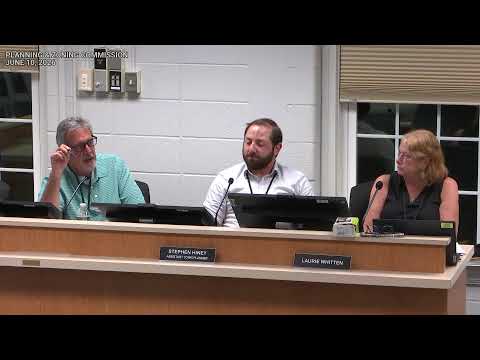
Zoning enforcement staff told the Planning & Zoning Commission on June 10 that the town’s enforcement docket (January–May) lists 42 violations and several citation liens, and that one industrial site with a large sand pile has not provided required monthly reduction reports or testing results.
"We haven't received that," the zoning enforcement officer said of testing and reduction documentation tied to the sand pile and a detention pond where eroded materials have been observed. Staff said the sand contains metal and processing residues and that stormwater running from the site connects to nearby wetlands, and that the company has missed required milestones and failed to provide updates promised after earlier meetings with the town.
Commissioners expressed frustration with the lack of responsiveness and the enforcement challenge. Staff said previous meetings included the company’s attorney, bank representatives and engineers, and that the town will continue to press for testing and corrective work. "Any stormwater runoff that runs into there runs into the wetlands," the enforcement officer said, urging follow‑up testing and wetlands agent involvement.
Separately, the commission heard a lengthy discussion about clothing drop boxes placed across town by private firms (some out of state) that have generated complaints about debris and rodents. Staff noted the boxes are not currently recognized in the zoning regulations and often appear at properties without owner permission; past practice has been to refer complaints to the property owner or the health department, and to seek removal by property owners when companies do not respond.
Commissioners debated whether to allow boxes only for nonprofit organizations, how to prevent blight, and whether to treat boxes as recycling (which may fall outside zoning) or require a specific zoning permit. Several commissioners warned that allowing a limited exemption for some organizations could create pressure for widespread placement. "You can't do it for one and not everybody else," a commissioner said, arguing for consistent standards.
The commission asked staff to seek legal guidance and recommended forming a subcommittee or using an existing subcommittee to craft proposed regulatory language that would address ownership, permitted locations, duration, and aesthetics. Staff agreed to investigate options and report back at a future meeting.