Get Full Government Meeting Transcripts, Videos, & Alerts Forever!
Get email alerts on the Workforce Development topic
No spam. Unsubscribe anytime.
Workforce board urges Franklin County to defend JAG program as state budget cuts prompt region consolidation talk
Summary
Southeast Indiana Workforce Board Director Kurt Kegress told Franklin County commissioners that state budget moves and departmental shifts left the Jobs for America’s Graduates program without priority funding; he outlined local efforts to sustain JAG and warned that proposed regional consolidation could reduce access to services for rural residents.
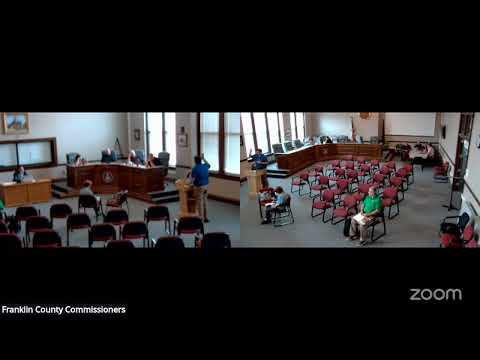
Kurt Kegress, director of the Southeast Indiana Workforce Board, used public comment time at the Franklin County commissioners meeting on June 10 to warn that state budget changes have left the Jobs for America’s Graduates (JAG) program at risk and to urge county engagement.
Kegress, who said he represents 10 counties including Franklin County, described how JAG’s oversight moved between state agencies during a difficult budget cycle and how that led to funding being placed in a block grant. "JAG was liquidated. They completely withdrew all support for that program," he said, adding that the board fought to keep funding and that local partners have stepped in to sustain programs where possible.
Kegress said the workforce board turned a $1 million federal allocation into roughly $10 million in investment last year through local fundraising and partnerships focused on vulnerable populations. He warned that proposed state consolidation of workforce regions could be harmful for rural residents, giving the example that veteran services currently served from a nearby office could require much longer travel distances under a consolidation scenario.
Local supporter Sarah Duffy told commissioners that the JAG program at Franklin County High School "has been amazing" and described work to ensure current students can complete the program in the coming school year. Duffy and Kegress outlined efforts to seek private and foundation funding, with the workforce board planning grant applications and outreach to potential sponsors.
Kegress asked commissioners to be prepared to act because county commissioners are members of the workforce board’s governing council and will be asked to approve future regional changes proposed by the state. He offered to meet with local leaders and share data and materials to inform any county response.
The commissioners thanked Kegress for the update; no formal board action on workforce regions was taken at the meeting.