Get Full Government Meeting Transcripts, Videos, & Alerts Forever!
Get email alerts on the Utilities And Infrastructure topic
No spam. Unsubscribe anytime.
APC advances major revisions to data‑center ordinance, posts version 4 for review and schedules public hearing
Summary
After reviewing 25 public comments, a work group recommended and the Area Planning Commission agreed to publish version 4 of the draft data‑center ordinance; changes include requiring municipal water connections, strengthened air‑quality and EMI standards, mandatory inclusion of construction sequencing, battery standards and grid‑stability reporting, with a public hearing set for August.
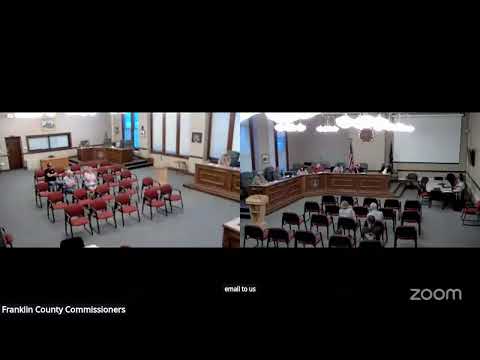
Franklin County’s Area Planning Commission advanced a substantially revised draft of a proposed data‑center zoning ordinance, directing staff to publish version 4 for public review and scheduling a hearing in August.
David, the work‑group lead, summarized responses to roughly 25 public comments and a series of substantive edits incorporated into the next draft. Key changes the group described include a requirement that proposed data centers connect to municipal water utilities (thereby prohibiting large‑capacity private wells for projects with significant groundwater withdrawal); a strengthened air‑quality modeling requirement tied to National Ambient Air Quality Standards; addition of EMI/RFI interference language with post‑construction monitoring; explicit battery‑energy‑storage safety and operational standards; a required grid‑stability report for utility interconnections; and a mandatory statement or section on construction sequencing in preliminary plans.
On the municipal‑water gating question, commissioners asked what would happen if a utility could not supply required water volumes. Staff responded that the draft is intended to be a gating requirement: projects that cannot meet municipal supply and interconnection thresholds would not be authorized to proceed under the county ordinance as written. ‘‘If the utility couldn’t support the water demand, they wouldn’t be able to build a data center in our county,’’ one staff speaker said.
Other technical edits include switching certain sound testing from a 1‑hour average to a 10‑minute averaging period to address spike noise during tests, specifying when earth berms (earthen buffers) are required (adjacent to public roadways or residential districts or when needed for noise abatement), and adding aquifer and watershed impact analyses and requirements for recycling of IT equipment. The work group also recommended that contractual bond/escrow amounts for road maintenance and decommissioning remain project‑specific (to be set in county contracts) rather than fixed in the ordinance language.
Height and shadowing were discussed at length. The draft sets a maximum above‑grade building height to accommodate two stories; a majority of commissioners favored a 75‑foot maximum in a straw poll, subject to the shadow‑study protections that require modeling for planting and harvesting seasons for adjacent agricultural lands.
The commission voted to publish version 4 on the county website for APC review, meet next month to discuss any refinements, and hold a full public hearing in August. Staff will incorporate the changes discussed by the work group and distribute version 4 for public comment before the hearing.