Get Full Government Meeting Transcripts, Videos, & Alerts Forever!
Get email alerts on the Governance Training topic
No spam. Unsubscribe anytime.
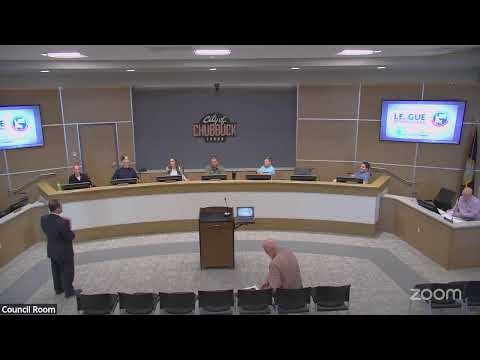
Chubbuck LUDC holds extended training on quasi‑judicial versus legislative decisions, ex parte rules
Summary
At its June 9 meeting the Chubbuck Land Use and Development Commission received an extended training on quasi‑judicial versus legislative decisionmaking, focusing on due process, ex parte communications, conflict of interest rules, and making written findings under Idaho's LUPA.
The Chubbuck Land Use and Development Commission devoted a substantial portion of its June 9 meeting to training on the differences between legislative and quasi‑judicial decisionmaking and on rules designed to protect due process in land‑use hearings.
Presenters explained that legislative decisions — such as changes to the comprehensive plan or city code — affect broad policy, while quasi‑judicial decisions are site‑specific and require a recorded factual record and written findings of fact and conclusions of law. "You're acting as judges," one presenter said, urging commissioners to treat site‑specific applications with judicial care and avoid outside fact‑gathering.
The training emphasized three recurring duties: avoid ex parte communications about pending matters, disclose and step aside for conflicts of interest under Idaho law, and base decisions only on the public record. "Quasi judicial procedures exist to protect individual rights through due process," said Darren Flute, former president of APA Idaho and a consultant with Jacobs Engineering Group, who gave a detailed overview of the Local Land Use Planning Act (LUPA) and the statutory and case law standards that guide local land‑use decisionmaking.
Presenters offered practical guidance: review staff reports and the relevant code sections in advance; if contacted by constituents, explain that substantive fact‑finding must occur in the hearing and, if an off‑record contact occurs, disclose it on the record; and ensure any approval or denial includes the ordinance or standards relied upon and the rationale connecting facts to the decision.
Commissioners asked about staff neutrality, timing of staff reports and public comment deadlines; presenters said notices are posted per the open‑meetings requirements, written comments may be accepted up to seven days before meetings, and the city posts meeting materials and training videos online for later review.
Presenters said training materials and the recorded video are available through the Idaho APA knowledge center and can be linked from the city dashboard; the meeting adjourned after presenters invited follow‑up questions.