Get Full Government Meeting Transcripts, Videos, & Alerts Forever!
Get email alerts on the Transit Funding topic
No spam. Unsubscribe anytime.
Mesa council approves Valley Metro operations funding after heated debate over subsidies
Summary
Mesa council voted to approve funding for Valley Metro operations and related paratransit items after public testimony and a divided council debate over subsidies, contractual obligations and long‑term costs; the transcript does not include numeric vote tallies.
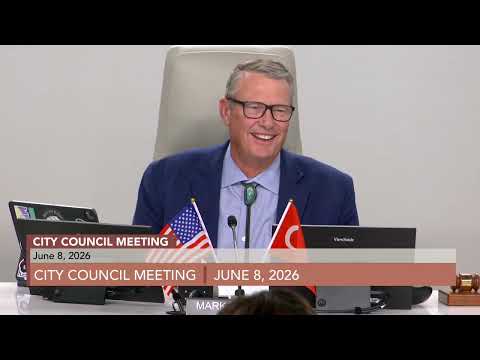
Mesa’s City Council voted June 8 to approve funding tied to Valley Metro operations, including a request officials described as covering a single year of maintenance and operations for a five‑mile stretch of light rail. Councilmembers debated whether the region’s transit commitments place an undue long‑term cost burden on Mesa taxpayers.
Councilmember Taylor argued the expenditures should be reconsidered and framed the issue as a taxpayer stewardship question. "We're being asked as a council to approve $18.3 million of Mesa taxpayer money for a single year of operations and maintenance on a five‑mile stretch of light rail — $3.6 million per mile," Taylor said, adding that light rail ridership in Mesa is low and that the city should renegotiate cost‑sharing and pursue independent legal review of intergovernmental agreements. "I will be voting no," she said.
City Attorney Mr. Smith responded to questions about legal exposure, describing the agreements with Valley Metro as intergovernmental bylaws and master payment agreements that include withdrawal constraints and a provision for a 12% penalty if payments are not made. "To withdraw from the agreement, we have to get their agreement or we have to cover the cost," Mr. Smith said, warning that default could lead to loss of voting rights and litigation.
Other councilmembers said the city must weigh its legal obligations against policy concerns. Councilmember Adams said defaulting on contracts would damage the city's credibility and that exploring amendments was different from breaching agreements. Councilmember Duff urged the council to recognize transit’s role in equitable mobility and economic development, noting voter approval of Proposition 479 and saying transit supports residents who cannot or choose not to drive.
Several members acknowledged low fare recovery rates and rising operating costs. In public comment, resident David Winstanley expressed concern about a perceived sole‑source relationship and cited Valley Metro figures he described as a 5.3% farebox recovery and a subsidy of $13 per fixed‑route boarding.
Council moved separately to approve agenda item 5B and then item 5C. The transcript records the motions as passing (the clerk said "motion passes"), but it does not provide numeric vote tallies.
What happens next: Council approved the items as presented; the city attorney’s explanation signaled that any change to Mesa’s obligations would likely require negotiation with other Valley Metro members or payment of associated costs. The council did not vote to pursue immediate default or withdrawal; members suggested any change would follow study and further discussion.