Get Full Government Meeting Transcripts, Videos, & Alerts Forever!
Get email alerts on the State Policy topic
No spam. Unsubscribe anytime.
County directors warn of risks as state moves eligibility services to district hubs
Summary
Dolores County directors and commissioners spent extended time warning the county about the state's plan to reorganize eligibility services into 11 districts with regional hubs, raising concerns about funding redistribution, HR liability, software replacement, timelines and potential local costs.
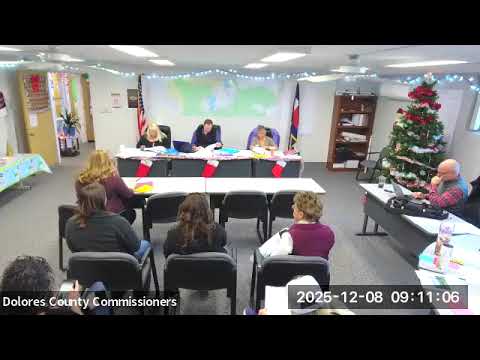
Directors and commissioners in Dolores County told the Board on Dec. 8 that a state plan to reorganize eligibility services into district-based hubs and centralized shared services presents major operational and financial risks for small counties.
County staff described a state map that reassigns counties into 11 new districts and centralizes many functions — including a statewide replacement of existing eligibility software, a state call center, and centralized document scanning. Directors said the state intends to pull funds currently administered by counties and reallocate them to district hubs, which would then be responsible for hiring and supervising staff, paying benefits and potentially paying for office space in other counties.
Why it matters: County directors argued the shift could create significant liability and HR challenges for counties hosting regional hubs. They highlighted unanswered questions about who would be the employer of record, how benefits and HR investigations would be managed across county lines, whether hub counties would charge surrounding counties for services, and how allocations would be determined. Directors and commissioners said the state has budgeted for the changes and characterized district and shared-service decisions as non-negotiable in the current rollout timeline.
Key concerns: County officials said that if hub staff are treated as contractors but remain subject to local supervision, counties could face audits and wage-and-hour or classification challenges. Other operational concerns included IT integration, equipment and remote-work arrangements, the potential need to hire or reassign staff, and the risk of workforce reductions in some counties. Staff also said RFPs for shared services are expected to be due Feb. 28 and that some county-attorneys' calls reported the state asking for bids quickly (reports included claims of bids requested by Christmas), creating a short window for counties to evaluate financial commitments.
Board direction and next steps: Commissioners asked staff to keep monitoring developments, to push for clearer allocation numbers from the state, and to coordinate with the County Commissioners' Association (CCI) and neighboring counties. Directors recommended seeking a chance to nominate or select regional hubs and to press the state for clearer financial terms before committing to hire or to host services. The board agreed to hold follow-up discussions with elected officials and legal counsel and flagged the urgency of getting clearer numbers prior to any bid deadlines.
Speakers quoted or attributed in this article appear in the article's speaker list.