Get Full Government Meeting Transcripts, Videos, & Alerts Forever!
Get email alerts on the Behavioral Health topic
No spam. Unsubscribe anytime.
Trillium reports serving 1,773 Beaufort County residents amid statewide consolidation
Summary
Trillium Health Resources told commissioners it served 1,773 Beaufort County residents in July 2024–June 2025, described a $1.7 billion budget spread across 46 counties and outlined local programs including mobile clinics, Narcan distribution and reentry simulations.
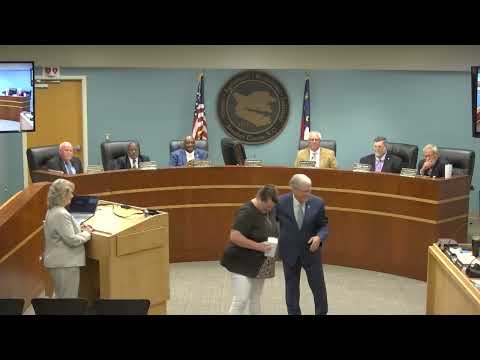
Dave Peterson, senior regional vice president at Trillium Health Resources, briefed the Beaufort County Board of Commissioners on the managed-care authority’s annual report and local services, telling the board that Trillium served 103,556 individuals across its footprint and 1,773 residents in Beaufort County in the July 2024–June 2025 reporting year.
Peterson said Trillium now covers 46 counties after a series of state-driven consolidations and described a $1.7 billion budget that focuses on high-acuity care: “We served very high risk individuals — those needing residential services, those in psychiatric hospitals, those needing wraparound services,” he said. He also noted that some populations previously served by regional organizations were moved to statewide or private plans, citing foster children moved to Healthy Blue in December 2025.
The presentation summarized local programming: weekly mobile clinics in Beaufort County, reentry simulations for people leaving incarceration, Empower summer camps for people with developmental disabilities, and distribution of Narcan kits. Peterson said the county will receive Narcan kits by the end of the month and that Trillium maintains a 24/7 access line staffed by licensed clinicians.
Commissioners pressed for operational detail. Commissioner Richardson asked what services are offered to people with severe substance-use disorders rather than prevention programs; Peterson described intensive outpatient programs and opioid addiction treatment, noting there are five-day-per-week intensive services and three-day comprehensive outpatient programs available through provider contracts. He also said judges can order participation in these services but many referrals are voluntary.
Peterson emphasized Trillium’s governance model that includes consumers: “Twenty-five percent of the people on our governing board are members receiving services,” he said, explaining the role of regional advisory boards and consumer-family advisory committees in planning.
The presentation closed with staff offers to answer further questions and appreciation for commissioners’ long-term support of regional behavioral-health services.