Get Full Government Meeting Transcripts, Videos, & Alerts Forever!
Get email alerts on the Energy Efficiency And Solar topic
No spam. Unsubscribe anytime.
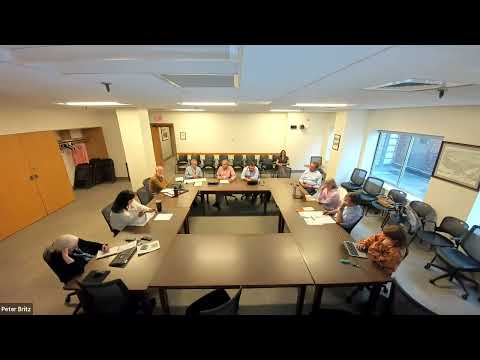
Portsmouth committee reviews energy-audit findings, rooftop-solar prospects and tight rebate windows
Summary
The city’s energy committee heard a presentation from Public Works Director Peter Rice on an EI energy-audit worksheet that identifies potential measures (LEDs, rooftop solar, controls) that could yield roughly $288,000 in annual savings; members flagged short deadlines for a 95% New Hampshire Saves rebate and asked staff to pursue clarifications and next steps.
Peter Rice, director of public works, briefed the Portsmouth energy committee on an EI energy-audit worksheet and potential projects the city could pursue to reduce operating costs and greenhouse-gas emissions. Rice told the committee the audit lists a range of measures — from LED lighting and controls to rooftop solar — and that the package could generate about $288,000 a year in operating savings, with roughly $128,000 attributed to rooftop solar installations.
Rice emphasized that most projects would be undertaken as part of normal capital planning rather than driven solely by rebates. He warned that some incentives in the worksheet require validation and that the city is unlikely to meet the aggressive August 31 application lock date for many large capital projects tied to the New Hampshire Saves 95% rebate opportunity, which would require expenditures by Dec. 31. "This entire road map of energy savings was going to generate 288,000 of annual savings. The rooftop solar is 128,000 of that," Rice said while reviewing the audit’s financials.
Committee members pressed for specifics on eligibility and timing. Members raised the indoor pool and the Spreer Point facility as examples of sites with mechanical systems that might qualify for rebates; Rice and others noted the city does not own some of those buildings and that ownership or lease terms affect what the municipality can bond or invest in. Rice said utilities may still fund improvements at leased facilities in some cases but that council-level policy choices are required for major commitments.
Members also asked whether the rooftop/ground projects could use community or virtual net metering to distribute benefits across multiple municipal loads. Rice said those interconnection and net-metering questions are unresolved and worth clarifying with consultants and regulators. The committee discussed logistics for interconnection and feeder capacity, and whether group net-metering scenarios were considered in the consultant analysis.
On financing and next steps, Rice said the city is preparing an RFQ for rooftop solar at the DPW facility and is revisiting the city’s power-purchase agreement in Madbury. He said roughly $70,000 is available immediately in the capital plan to begin initial work or studies and that larger installations would be phased through the CIP. Members asked whether the audit analysis included scenarios that exclude tax credits; Rice said Apex’s pro forma included multiple scenarios and that some scenarios showed cost-effectiveness even without tax credits.
The committee did not take formal votes on project approvals. Rice said staff will meet with Clean Energy New Hampshire and Franklin Energy to validate rebates and eligibility, follow up with Apex on outstanding financial questions, and report back to committee staff (Jillian Harris) with clarifications and next steps.
Ending: The committee requested additional financial detail and clarified that any larger capital decisions would be brought to council for policy direction. Rice said staff will return with validated incentives, clarifications on net-metering feasibility and potential project-phasing options.