Get Full Government Meeting Transcripts, Videos, & Alerts Forever!
Get email alerts on the Employee Benefits topic
No spam. Unsubscribe anytime.
West Bend board begins review of health insurance options to curb rising costs
Summary
Assistant Superintendent Lenny Hansen opened a districtwide conversation about next year’s health-insurance program, presenting data on costs and a spectrum of options — from higher out-of-pocket limits to spousal carve-outs and reimbursement models — and saying any change could take effect no earlier than Jan. 1, 2027.
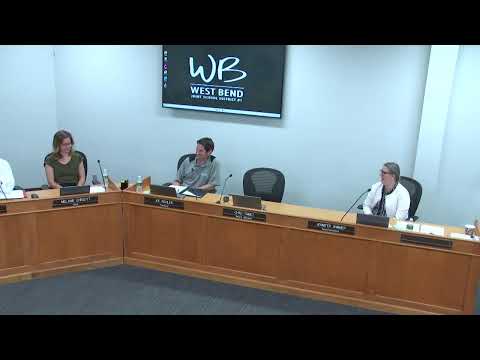
At the West Bend School District board meeting on June 8, Assistant Superintendent Lenny Hansen presented an introductory review of the district’s health-insurance program and framed a multi-step process to identify sustainable changes.
Hansen said the presentation was an opening discussion, not a proposal. "The West Bend School District has the best total compensation package of any district in the county," he told trustees, citing a total-compensation figure for a typical teacher that he said is above $97,000. He added the district’s most common family premium this year is $127 per month and employees currently pay 5.4% of premium costs, versus a county median near 12%.
Hansen walked the board through a spectrum of options that neighboring districts use: (1) exchange/reimbursement models that remove employer-provided insurance and give employees a fixed stipend to buy coverage on the marketplace; (2) raising out-of-pocket maximums and deductibles; (3) spousal carve-outs or incentive-based family-savings approaches; and (4) premium-share adjustments (fixed-percentage or fixed-dollar employer contribution models). He cautioned against abrupt shifts that could leave employees exposed to catastrophic costs and warned about "adverse selection," a phenomenon he said can destabilize a plan if the healthiest employees opt out and higher-cost participants remain.
On mechanics, Hansen clarified the district is self-funded: the district pays claims and uses an administrator (UMR) to process payments. "More than half of all of your health-care costs are borne by a tiny, tiny number of people on the plan," he said, explaining why spending can swing unpredictably.
Board members pressed for clarity about trade-offs and timing. Administration emphasized that any change would be gradual and deliberate; the earliest effective date for any adjustment would be Jan. 1, 2027. Hansen said staff will analyze options further, communicate with employees through the district newsletter and one-on-one meetings, and return with specific proposals later in the summer.
Why it matters: health insurance is the district’s second-largest expense after wages, and Hansen told the board that long-term cost growth of 6%–10% annually requires proactive planning to avoid deeper cuts later. He emphasized that the district’s stated goal is to remain a leader in total compensation while moving the benefits program onto a financially sustainable, multi-year footing.
What’s next: administration will continue analysis and present specific options at a future meeting; there was no action or vote on plan design at the June 8 session.