Get Full Government Meeting Transcripts, Videos, & Alerts Forever!
Get email alerts on the Data Centers topic
No spam. Unsubscribe anytime.
Clay County hears strong public push to pause data‑center approvals as officials seek study
Summary
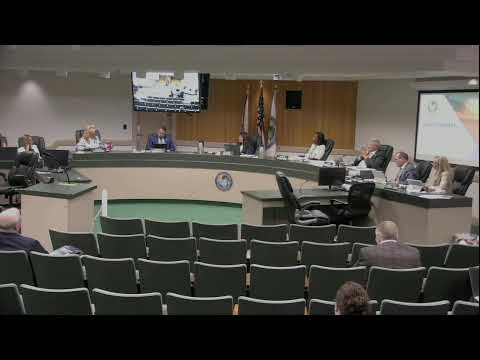
At a packed June 9 meeting, Clay County commissioners held a first hearing on a proposed 12‑month moratorium to study the local impacts of data centers. Dozens of residents urged a pause, citing groundwater, power and air‑quality concerns; some urged fuller engagement with potential applicants so officials can write rules.
Clay County commissioners held the first of two public hearings on June 9 on a proposed 12‑month moratorium to halt acceptance and review of land‑use applications for data‑center facilities in unincorporated Clay County. The measure, requested by several commissioners, would give staff time to study the potential effects of large computing facilities and draft land‑development and comprehensive‑plan language before new projects proceed.
The hearing drew dozens of speakers during an extended public‑comment period, with many residents urging the board to adopt the moratorium. “This is not about stopping technology — it’s about protecting our groundwater and community infrastructure,” said Bruce Jackson, a longtime Jacksonville resident who has worked in data‑center operations. “Data centers are coming,” he said, and counties need time to set rules before sites are approved.
Speakers cited multiple local risks. Environmental experts and residents warned that even closed‑loop cooling systems can require makeup water and that large facilities could draw millions of gallons daily from aquifers that supply drinking water and sustain creeks and wetlands. Bruce Reynolds, a retired environmental protection specialist, told commissioners that medium‑size facilities can draw “.5 million to 5 million gallons per day” and that larger AI training hubs can demand “5 to 10 million gallons per day,” numbers that, he warned, can strain local water supplies.
Electric and grid concerns surfaced repeatedly. Several commenters warned that building‑scale power upgrades can be costly and that backup generators used for reliability can worsen local air pollution. Others questioned the number and quality of permanent jobs data centers bring, saying the short‑term construction jobs do not always offset long‑term environmental and utility costs.
Not everyone urged an outright ban. Some speakers — including business‑oriented commenters and a few consultants — argued for allowing applications so county planners could review real project proposals and negotiate protections. “If we don’t allow applications, we can’t learn what kinds of facilities might want to locate here,” said Marcia Garcia, who asked commissioners to permit applications while staff evaluates standards and mitigation requirements.
Commissioners said they had been monitoring other local governments and state guidance; several suggested coordination with neighboring Nassau County and regional planners. The board will hold a second hearing on the proposed moratorium on June 23; that is when commissioners are expected to consider adopting the ordinance or modifying it.
The board did not vote on the moratorium at the June 9 meeting. Commissioners said the June 23 session will allow staff time to gather more technical input on groundwater, electricity and permitting needs and to consider public comments, many of which urged strict local standards or a ban on groundwater withdrawals for cooling.
What’s next: The board’s June 23 meeting will include the second hearing and, if the moratorium is adopted, a one‑year pause in new data‑center land‑use approvals while the county studies code changes. Residents who testified urged commissioners to use the pause to develop clear rules on water withdrawals, noise, backup‑generator emissions, stormwater and allocation of utility‑upgrade costs so any future approvals protect neighborhood and natural resources.