Get Full Government Meeting Transcripts, Videos, & Alerts Forever!
Get email alerts on the Land Use Planning topic
No spam. Unsubscribe anytime.
County planner proposes "High Impact Development" overlay to review large projects early
Summary
Clearfield County planner Jody Brandon presented a proposed High Impact Development (HID) overlay to the county subdivision and land development ordinance to require early engineering review of large projects’ traffic, stormwater and utility impacts while preserving municipal land‑use authority.
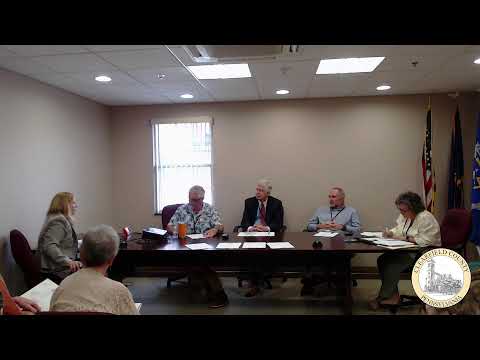
County Planner Jody Brandon presented a draft High Impact Development (HID) chapter to Clearfield County commissioners on June 9, describing it as an engineering‑driven overlay focused on early review of large projects that could otherwise move forward without municipal zoning review.
Brandon said the HID overlay would not replace the county subdivision ordinance or local municipal zoning. Instead, it would apply only to very large projects — examples cited included distribution centers, large solar projects and data centers — and would focus on design and construction impacts such as traffic queuing, emergency access, stormwater and utility capacity. Brandon emphasized counties lack authority to regulate land use and said the HID approach keeps the county “within our lane” while providing predictable requirements for infrastructure analysis early in the project timeline.
The proposed process would allow developers to submit equivalent‑performance designs and rely on existing state or federal studies (for example, PennDOT or conservation district permits) rather than duplicating analyses. Brandon said triggers would be tied to project scale and impacts — large buildings, high vehicle trip generation, or extensive earth disturbance — so typical small businesses, homes and farms would not be subject to the overlay.
Brandon described measures intended to protect rural character and nearby residents through design requirements such as buffering, inward orientation of truck ports, screening and pre/post road‑condition documentation; she said required mitigation or infrastructure upgrades would be paid by developers, not taxpayers. The planner also noted coordination with utilities to confirm capacity would be part of the review for projects that create large electricity or water demands.
Brandon said the planning commission has reviewed iterations of the draft and will provide formal recommendations; if the planning commission supports the chapter it would return to the commissioners for consideration and follow the Pennsylvania Municipal Planning Code’s public‑process requirements.
Commissioners and staff who spoke in support called the proposal proactive and useful in jurisdictions that lack local zoning, while noting it would not give the county authority to prevent particular land uses. The presentation closed with a commitment to a formal public‑comment process before any decision.
Next steps identified in the meeting record are planning commission review, public input under the Municipal Planning Code and a future return to the commissioners for possible adoption.