Get Full Government Meeting Transcripts, Videos, & Alerts Forever!
Get email alerts on the Community Placemaking topic
No spam. Unsubscribe anytime.
Agoura Hills council backs 'Agora Road' corridor placemaking vision, tasks staff with next steps
Summary
Council voted to receive and file a community placemaking vision for the Agora/Agoura Road corridor, directing staff to pursue short‑term activations, market analysis and zoning tools to encourage adaptive reuse and to explore housing options as part of longer‑term planning.
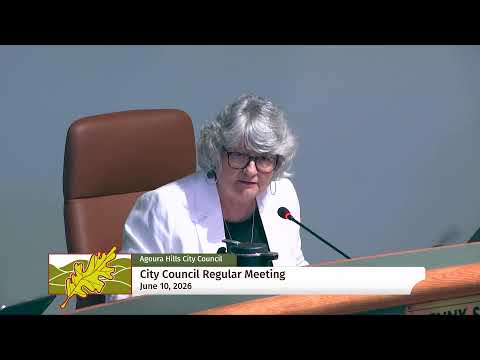
The Agoura Hills City Council voted June 10 to receive and file a corridor‑wide community placemaking vision focused on repurposing underused office properties along Agoura Road and to direct staff to pursue short‑term activations, market analysis and potential zoning changes.
Assistant City Manager Ramiro Adva and a staff team presented a plan developed with consultant RRM that promotes temporary activations (pop‑ups and events in underused parking areas), pedestrian and bicycle improvements, and incentives for adaptive reuse of office buildings. Staff said the goal is to transform the corridor into a destination with dining, cultural and gathering spaces, while preserving opportunities for longer‑term redevelopment including housing where appropriate.
Senior Planner Angela Georgf and Director Robbie Nessik emphasized constraints: the city does not own most parcels in the corridor, current zoning restricts some uses (notably residential uses), and any housing proposals could trigger General Plan amendments and rezoning. Staff recommended a two‑track approach: short‑term, lower‑cost administrative pathways to enable temporary activation and pilot uses, and longer‑term tools such as area‑specific market analysis, parcel evaluations and potentially a specific plan to guide rezoning or development incentives.
Consultant Nick Dich described the corridor’s character and noted the opportunity created by vacant or underused office stock, shade and existing landscaping on surface parking. Staff proposed a sequencing framework that aligns corridor planning with upcoming housing element cycles so that sites evaluated for a specific plan could also be considered as housing opportunity sites if council so directs.
Council members expressed strong support for aggressive follow‑through. Several members urged rapid pilots and temporary activations—citing a December 2 ribbon‑cutting event on a separate wildlife bridge as a near‑term opportunity for a community activation—and asked staff to return with market analyses, parcel‑level constraints, and draft zoning options. Council directed staff to continue outreach with property owners and to report back when specific legislative or budget actions are required.
Council Member Sylvester moved the staff recommendation; Council Member Chris Anstead seconded. The motion passed with a 4–0 roll call while Mayor Pro Tem Deborah Klein Lopez was recused from discussion; she rejoined the meeting after the vote.