Get Full Government Meeting Transcripts, Videos, & Alerts Forever!
Get email alerts on the Housing Affordability topic
No spam. Unsubscribe anytime.
Richfield council adopts strict policy limiting 4D tax classification to preserve affordable housing
Summary
The Richfield City Council on June 9 adopted a policy to limit the city's use of the 4D tax classification to preserve existing and select new affordable multifamily housing only after other financing is exhausted; council members emphasized the need to balance affordability with tax shifts to other residents.
Richfield City Council on June 9 adopted a policy to guide limited use of Minnesota's 4D tax classification as a tool to create and preserve affordable multifamily housing.
Council Member Hayford introduced the proposal, describing 4D as a mechanism that can lower the tax classification on qualifying properties. "The 4D classification provides a reduction in the tax classification for the property from 1.25% to 0.25% resulting in substantial cost savings to the property," Hayford said, noting those savings can make rehabilitation or new construction more feasible.
City staff told the council the policy is intended to make 4D a tool of last resort. The policy sets housing priorities — preserving naturally occurring affordable units, prioritizing accessible units and larger-family units, and assessing whether use for new construction is financially necessary after other funding sources are exhausted. Staff described an application process that requires an application fee and financial-review by consultants so the city does not absorb review costs.
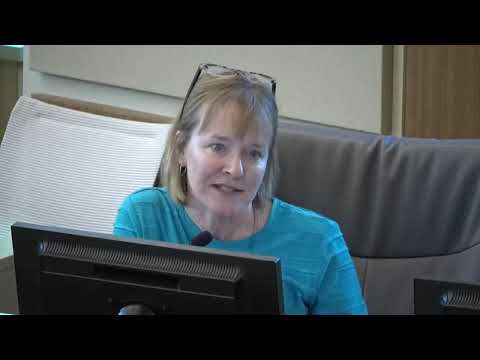
Council members who spoke praised staff for the work and voiced cautions. "I will be voting to support this, but I will reiterate a comment that I made in the work sessions'0 we must balance affordability needs with not shifting costs onto other taxpayers," a council member said. Council Member Burke thanked staff for educational outreach and said the policy helped clarify which properties might qualify and the trade-offs involved.
The council moved, seconded and approved a resolution adopting the 4D policy by voice vote.
What happens next: staff will post the policy and the city will follow the outlined application and review process when developers seek 4D status; any request will be evaluated against the prioritized housing needs and financial criteria set in the policy.