Get Full Government Meeting Transcripts, Videos, & Alerts Forever!
Get email alerts on the Public Engagement topic
No spam. Unsubscribe anytime.
Scarborough communications committee outlines $25,000 outreach plan, ambassadors and local‑news pilot
Summary
The Scarborough Communications Committee reviewed staff proposals to spend a $25,000 communications budget on expanded print inserts (Scarborough Living and tax‑bill inserts), a six‑month FlashVote pilot, an AI chatbot and website improvements, and creation of a neighborhood ambassador program; residents urged earlier notice and faster posting of minutes.
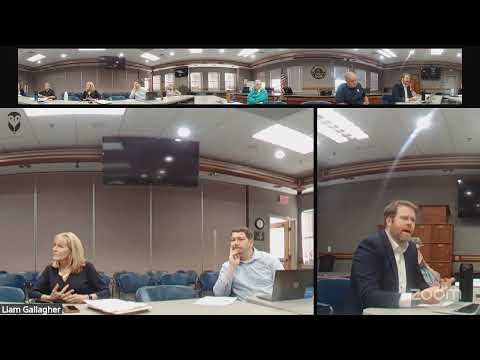
Scarborough’s Communications Committee met June 8 to map public‑engagement work over the next year, approving a staff plan to balance digital reach and a renewed print presence while exploring neighborhood ambassadors and a possible local‑news pilot with the Maine Community Foundation.
Town staff told the committee the communications line in this year’s budget is $25,000 and proposed a mix of expanded digital outreach and targeted print efforts. Staff recommended scaling the partnership with Scarborough Living (now published every other month) to produce repeat town inserts to distribute at town facilities and to mail to residents who opt in. The town has used tax‑bill inserts twice a year since the loss of the local paper and will keep that channel as a broad, lower‑cost option.
“Print media mailed to every home in Scarborough is about $9,000,” a town staff member said, noting cost constraints as the committee weighed options. Staff also described a $2,400 tax‑bill insert that reaches every household and proposed a $5,000, six‑month portion of an annual FlashVote subscription to run short, statistically valid surveys tied to specific council decisions.
Residents and committee members pressed for better distribution of Scarborough Living and more deliberate neighborhood coverage. Several participants suggested neighborhood columns or a recurring “day in the life” feature to highlight different parts of town and encourage local contributors. Committee members and residents said some neighborhoods and common pickup points do not reliably receive copies, and they discussed connecting the magazine’s owner, Kate, with local contributors and distribution partners.
Public commenter Carol urged more frequent, timely summaries and faster posting of minutes. “The newsletter itself is very robust,” Carol said, “but it’s difficult to keep up with what’s happening in town committees when minutes and agendas are months out of date.” The committee heard multiple examples of residents who reported being unaware of committee work until a decision reached the council’s first reading.
Staff described near‑term technical improvements: a more prominent calendar button on the town website, opt‑in notifications for committee agendas and, imminently, an AI chatbot labeled “Ask Scarborough” that will search only town content. The committee discussed using AI tools to generate short summaries or headlines to help residents quickly understand what is on each committee’s agenda.
To prioritize outreach, members proposed a three‑tier rubric (tier one for high‑impact items, tier two for neighborhood‑specific items and tier three for routine administrative notices). That rubric would guide how much proactive outreach the town performs before key decisions, and committee members suggested more time between first read and final action for items likely to be controversial.
The committee also discussed formalizing a neighborhood “ambassador” program to help distribute materials, promote signups for the e‑newsletter and surface local concerns to staff and elected officials. Staff agreed to draft a short job description and suggested the ambassadors could help identify under‑served locations for printed inserts.
Separately, a committee member reported that the Maine Community Foundation is exploring a roughly $1 million initiative to restore local journalism; the foundation’s staff member (Lisa) is expected to share details and potential pilot options with the committee. Members said a presentation by the foundation or its representative would be appropriate at an upcoming meeting.
The meeting concluded with agreement to refine the ambassador role, revisit the Press Forward/local‑news discussion and continue developing the tiered communications approach. A motion to adjourn was moved and seconded.
What’s next: staff will draft an ambassador job description, bring back refined options for allocating the $25,000 communications line and invite a representative of the Maine Community Foundation to present about the local‑news pilot.