Get Full Government Meeting Transcripts, Videos, & Alerts Forever!
Get email alerts on the Local Budget topic
No spam. Unsubscribe anytime.
Curry County budget committee identifies $65,000 gap, eyes LGIP interest and personnel swaps to balance
Summary
At a June 10 Curry County budget committee meeting, members appointed Treasurer Nicholas Vino as budget officer, reviewed revenue assumptions (ONC, timber, marijuana tax) and identified a $65,000 general‑fund shortfall; the committee discussed using allocated LGIP interest, an IT personnel reduction and a vacant civil/animal position swap to close the gap and agreed to reconvene Monday to finalize changes.
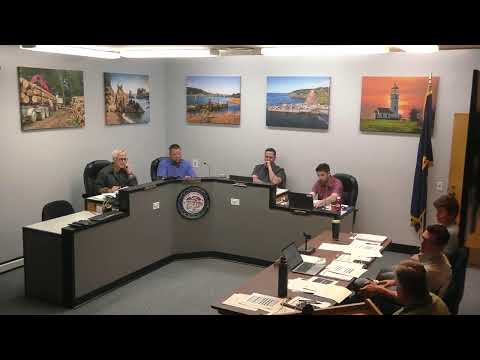
Curry County’s budget committee on June 10 appointed Treasurer Nicholas Vino as budget officer and spent most of its meeting reconciling revenue assumptions and staffing requests as it closed in on a $65,000 shortfall in the proposed general‑fund budget.
Vino summarized the budget message and highlighted three revenue sources that shaped the draft: recent ONC payments, timber receipts and marijuana tax rollovers. “The big message is that the ONC funding is going to really be critical for us going forward,” Vino said, noting the county received two ONC payments and hopes that stream continues.
Committee members and staff walked through a status‑quo budget that includes only cost‑of‑living adjustments (COLA) and that, before any new FTEs are approved, shows a roughly $65,000 deficit that must be filled before adoption. “Right now there’s a deficit of 65,000 that we need to cover with additional resources,” Vino told the committee during the review.
Much of the discussion focused on which one‑time or recurring balances can safely be used to cover the gap without creating future shortfalls. Staff reported the county’s LGIP (local government investment pool) allocated‑interest receipts were about $376,000 year‑to‑date but budgeted conservatively at $300,000. Committee members said that allocated interest, together with modest corrections to receivables and expected marijuana‑tax rollovers, could cover the immediate shortfall.
Committee members also reviewed accounting issues that had previously inflated reported revenues: internal transfers and department reimbursements sometimes showed up as gross revenue in different places. Staff said work to reallocate administrative charges and create clearer restricted funds (for example, new special revenue accounts for the surveyor) should improve transparency going forward.
Personnel costs were a major driver of the budget changes. Negotiated rollups and newly included COLA/PERS adjustments materially increased payroll projections. The sheriff’s office submitted updated personnel worksheets that reflected those wage impacts. At the same time, administrative and IT requests rose after the county shifted one‑time ARP spending out of the operating presentation; staff described a near‑term IT project of about $300,000 for software, licensing and refreshes.
To find offsets, staff proposed a combination of adjustments that the committee discussed: increasing the allocated‑interest estimate, removing or repurposing one IT specialist position (estimated savings roughly $52,000), and reassigning a currently vacant civil/animal‑control position toward courthouse/corrections communications duties. Committee members described those changes as a mix of “horse‑trading” job descriptions and timing shifts rather than adding net new positions.
The committee also considered the compensation‑committee recommendations for elected officials (treasurer, clerk, assessor, sheriff) and whether to restore commissioners’ pre‑cut salaries. Members discussed tradeoffs between modest elected‑official pay adjustments and retaining resources for frontline staffing or one‑time projects; staff estimated that fully restoring commissioners to 2023 pay levels would consume a substantial share of the available one‑time money.
By the close of the meeting staff had sketched a package that increases allocated‑interest assumptions, trims the IT personnel ask and repurposes an existing vacancy. That package, staff said, would cover the identified $65,000 shortfall and leave a modest residual for other priorities. The committee agreed to reconvene Monday afternoon to review final spreadsheet updates and, if satisfied, approve the proposed changes so staff can publish the required notice ahead of the adoption hearing.
What’s next: staff will circulate an updated proposed budget column showing the net effects of the recommended adjustments; the committee scheduled a brief follow‑up meeting Monday to consider approval and to meet publishing timelines for the formal adoption hearing.