Get Full Government Meeting Transcripts, Videos, & Alerts Forever!
Get email alerts on the Rv Regulation topic
No spam. Unsubscribe anytime.
ULDC committee backs changes to RV ordinance, recommends ID checks, occupant data and seasonal limits
Summary
The Town of Loxahatchee Groves ULDC committee voted 5-0 to recommend three changes to a proposed recreational vehicle ordinance (2026-01): require photo ID verification, include occupants' information on permits, and tie temporary occupancy to a seasonal window (committee suggested November'April).
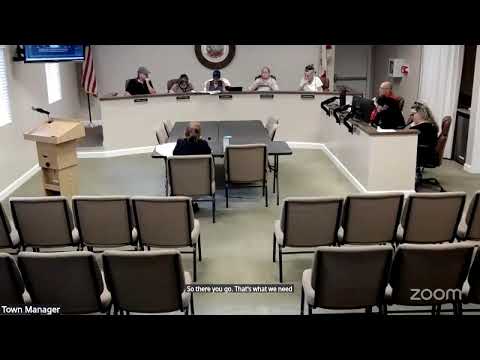
The Town of Loxahatchee Groves Unified Land Development Code (ULDC) committee on June 8 reviewed proposed ordinance 2026-01, intended to replace the town's existing RV rules, and voted unanimously to forward three specific amendments to the Town Council.
Community Standards Director Karen Gardner Young, who presented the item, said the draft before the committee consolidated prior council workshop notes, staff suggestions and attorney edits into a single document for first reading. "I brought forward the recreational vehicle program," Gardner Young told the committee, noting the draft includes definitions drawn from Florida statute, Palm Beach County and the town's current code for committee review.
Why it matters: committee members said the program has been strained by year-round rentals and screening tactics that make enforcement difficult. Members argued the ordinance should make it easier to identify occupants and prioritize enforcement against large or repeat offenders while exempting personal, unoccupied RV storage.
Key changes recommended
- Photo ID verification: the committee asked staff to add a field and process for verifying occupants' photo identification as part of any permit for an occupied RV. The addition is meant to improve the town's ability to confirm who is staying on a property when enforcement or public-safety concerns arise.
- Occupant information: members requested that permit applications capture occupant (tenant) names and vehicle identifiers (make/model/color/license plate) and list dates the RV will be on-site.
- Seasonal limitation tied to equestrian activity: several members proposed defining an allowable temporary-occupancy window tied to local equestrian activity rather than an open six-month rule. The committee coalesced around recommending a seasonal window (committee discussion suggested November'April as an example) so permits more clearly match the town's stated policy intent to serve equestrian seasonal needs.
Other substantive points
- Definitions: staff and the town attorney reviewed the town's RV definition and related commercial-vehicle language. The committee discussed whether the town could or should adopt stricter local definitions than the state, and whether modular homes or units delivered on trailers should be classified differently.
- Occupied vs. unoccupied RVs: the proposed ordinance removes an affidavit previously used for unoccupied (storage) RVs and focuses tracking on permitted, occupied units. Committee members asked the text be clarified so that personal, parked RVs used for storage are not unintentionally counted as occupied rentals.
- Enforcement and costs: members raised enforcement challenges because many alleged rental sites are screened from public view. Staff noted historical program costs and the strain on limited code enforcement resources; committee discussion cited an implementation cost figure and low fee recovery under the prior approach. Members suggested prioritizing enforcement against properties with multiple RVs and using registration fields to create better evidence for special-magistrate proceedings.
Vote and next steps
After discussion the committee made and seconded a motion to recommend the three modifications (photo ID verification, occupant information on permits, and a seasonal occupancy window) to the Town Council. The motion carried 5-0. Staff will reflect the committee's direction in a redline and forward the recommended language for Council consideration at second reading.
What the ordinance does not yet change: the committee did not adopt final language for vacant-land prohibitions or every nuance of acreage thresholds; staff and the town attorney noted that either explicit vacant-land language or clear bonafide-agricultural exceptions would be acceptable and asked the committee which it preferred for clarity. The committee directed staff to capture its preferred clarifications and return the redlined ordinance to Council.