Get Full Government Meeting Transcripts, Videos, & Alerts Forever!
Get email alerts on the Data Centers topic
No spam. Unsubscribe anytime.
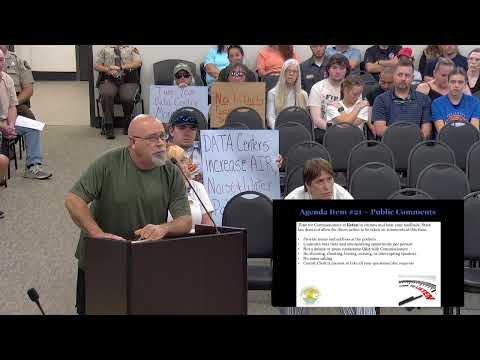
Residents urge moratorium on data‑center approvals and complain of ongoing odors
Summary
During public comment residents asked the commission for a two‑year moratorium on data‑center approvals pending environmental and public‑health studies and accused county and partner agencies of inadequate transparency and action on foul odors; commissioners did not take formal action on the requests.
Several residents used the meeting’s public‑comment period to press the Whitfield County Board of Commissioners for greater transparency on data‑center planning and to seek a two‑year moratorium on new approvals.
Carmen Schuler of Dalton asked commissioners to impose “a 2‑year planning moratorum on accepting any future applications and making any future development approvals until those strategic plans can be developed based on research, study, and best practice.” She said she was requesting environmental and public‑health impact studies and adoption of best practices before further approvals.
Kathy Cot also urged a slower, more transparent process and public education about data centers, financing mechanisms and potential local impacts. Dennis Mock, speaking as a citizen and city‑council member, urged the county to hire outside help to fix problems at the tax assessor’s office so local governments can better project revenues.
James Worth delivered an extended public comment focused on odors and air impacts he connects to nearby industrial operations (referred to in the transcript as Asentia/Assentia) and warned that proposed data‑center backup generators would increase diesel emissions. He described specific figures he said were associated with the generators (transcript references include 81.4 megawatt generators and an estimate of thousands of gallons of diesel burned) and accused officials of “intentional negligence” in not protecting residents’ air quality. The chairman ended his time when the allotted time expired; no board action on the moratorium, additional studies, or new procedures was recorded during the meeting.
There were no motions or votes tied to the moratorium request; commissioners acknowledged comments but did not commit to a study or moratorium during the session. The transcript shows residents pressing for improved public notification and more transparency about non‑disclosure agreements and financing commonly associated with data‑center deals.
What happens next: The items raised are matters for future action—the commission did not schedule any specific follow‑up during the meeting. Residents seeking formal policy changes or moratoria would need to request an item be placed on a future agenda for deliberation, study or vote.