Get Full Government Meeting Transcripts, Videos, & Alerts Forever!
Get email alerts on the Short Term Rentals topic
No spam. Unsubscribe anytime.
El Paso council votes to start collecting hotel-occupancy tax on short-term rentals
Summary
The council approved a resolution directing staff to implement collection of El Paso'9s hotel-occupancy tax on short-term-rental platforms; staff estimated roughly $3.4 million in first-year local revenue and a 90-to-180-day implementation window.
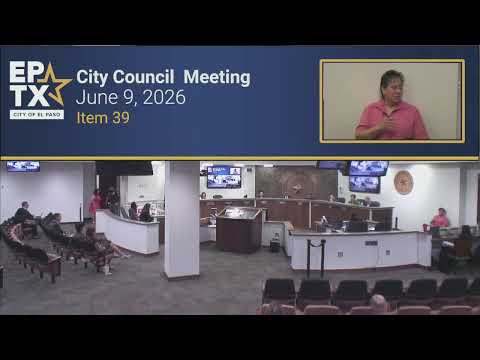
The City Council voted unanimously on June 9 to authorize staff to begin collecting the city'9s hotel-occupancy tax on short-term rentals (STRs) listed on platforms such as Airbnb and others. The measure directs the city manager to implement collection in accordance with state law and local code.
Why it matters: City planning and finance staff estimate there are about 1,900 registered short-term rental listings in El Paso and project roughly $3.4 million in local hotel-occupancy-tax revenue in the first year if the collection program is implemented and compliance is achieved. Councilmembers said the move both levels the playing field for conventional hotels and provides additional funds dedicated by law to destination marketing, convention facilities and related capital needs.
How it will be implemented: Legal staff told the council the program could be implemented between 90 and 180 days after the resolution, allowing the city and platforms time to set up automated collection and to notify short-term-rental hosts about the change. Staff recommended working with the city'9s current vendor that handles hotel-occupancy-tax remittances to add STR collections and to run compliance audits.
Public comment and concerns: Supporters said the tax is standard in many jurisdictions and recaptures visitor-borne revenue for tourism, arts and convention purposes. Speakers at public comment urged careful outreach and auditing to catch owners who might try to rent off-platform. The city said vendor tools and audit procedures will be used to identify noncompliant listings.
What'9s next: Staff will produce the administrative steps and a communication plan for platform operators and local hosts, with an expected 90—180 day window before collection begins.