Get Full Government Meeting Transcripts, Videos, & Alerts Forever!
Get email alerts on the Court Performance topic
No spam. Unsubscribe anytime.
Council presses Circuit Court over $4.1M surplus amid slow juvenile case processing and security needs
Summary
Council President Cohen and Councilwoman Ramos pressed Circuit Court administrator Lionel Moore about a reported $4.1 million FY25 surplus (about $1.7 million from the general fund) while juvenile and shelter-case processing rates lag statewide; Moore said surplus funds stem largely from outside security grants and described planned one-time uses including juvenile-facility repairs and a requested $1.2 million security upgrade for 2027.
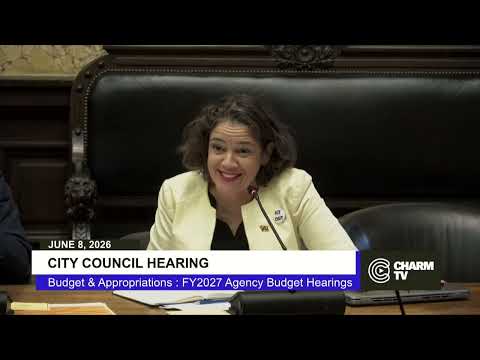
Council President Cohen pressed the Circuit Court about its FY25 $4.1 million surplus and declining case-processing performance during a Baltimore City Council budget committee hearing. Cohen said the court ran a $4.1 million surplus in FY25, including a roughly $1.7 million surplus in funds that came from the general fund, and cited Maryland Judiciary metrics showing only 51% of juvenile delinquency cases were terminated on time, with an average processing time of 134 days, and a 47% on-time rate for child-in-need shelter cases with an average of 196 days. "Only 51% of juvenile delinquency cases were terminated on time," Cohen said, adding the local average processing time is "the highest in the state."
Lionel Moore, the court administrator, said the surplus likely reflects outside funding, particularly state grants for security upgrades that reduced the court's reliance on city funds. "It could have been as a result of funding that we received for security upgrades from the administrative office of the courts," Moore said, adding the court pursues grants and other outside resources whenever available. Moore also said the court anticipates using surplus funds for one-time facility needs, citing major juvenile-facility repairs and a requested $1.2 million security upgrade for 2027 that the city does not currently fund.
Councilwoman Ramos thanked the court for partnership on the in rem docket and noted the council provided dollars this year to add magistrate staffing to help address backlog; she said she is pursuing a state match and raised questions about whether recurring needs (for example, ongoing security costs) would require further city funding. Moore said the court meets weekly with the Sheriff's Office and applies for state funding for equipment such as magnetometers and X-ray machines on the Sheriff's behalf but conceded that some ongoing security obligations may require additional funding streams.
The committee did not issue a formal finding during the hearing. Councilmembers said they may schedule follow-up meetings to reconcile the surplus explanation with the performance metrics and to assess whether one-time surplus expenditures will sufficiently address ongoing security and operational needs.