Get Full Government Meeting Transcripts, Videos, & Alerts Forever!
Get email alerts on the Diplomacy topic
No spam. Unsubscribe anytime.
U.S. marks 250 years of diplomacy; Secretary Rubio praises American role
Summary
A 250th-anniversary presentation traces U.S. diplomatic milestones from the Treaty of Paris to post‑World War II reconstruction and notes the State Department’s current network of more than 270 missions; Secretary Rubio called the anniversary a celebration of the American people and their story.
The presentation marking 250 years of U.S. diplomacy traces key moments in American foreign policy and emphasizes the continued global reach of U.S. diplomats.
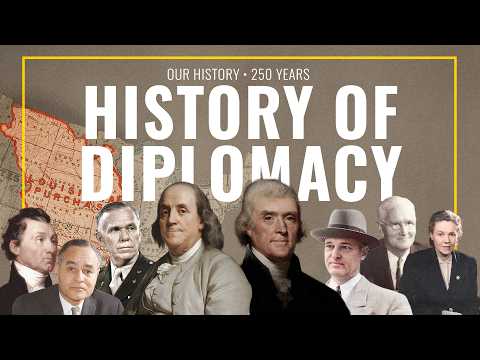
The program opens with an on-screen citation of Thomas Paine: "The cause of America is in a great measure the cause of all mankind." A narrator then surveys early diplomacy, noting Benjamin Franklin’s mission to secure an alliance in 1778 and that Thomas Jefferson later became the nation’s first secretary of state.
The narrator listed several historical milestones — the Treaty of Paris, the Louisiana Purchase, U.S. participation in the reconstruction of Europe after World War II and later peace negotiations in the Middle East — and said that American diplomats have "championed freedom, security, and human dignity."
"The world fundamentally looks different today than it would have looked had America not existed," Secretary Rubio said, adding that "the inspiration of America to the rest of the world has been extraordinary." The presentation points to the modern diplomatic footprint, saying that today U.S. diplomats operate from more than 270 missions worldwide and "work tirelessly to address global challenges and strengthen partnerships protecting U.S. security, prosperity, and democratic values."
Secretary Rubio concluded by framing the anniversary as broad and civic in scope: "It's not just a celebration of a country. It is a celebration of a people and of our story and what we have done together for 250 years." The presentation ends with a tribute to generations of diplomats who served across eras.
The program is a retrospective rather than a policy statement; it catalogs historical events and highlights the State Department’s global presence as a measure of continued diplomatic engagement.