Get Full Government Meeting Transcripts, Videos, & Alerts Forever!
Get email alerts on the Education Programs topic
No spam. Unsubscribe anytime.
Lindscott Learning Garden wins grant; teachers describe curriculum and compost plans
Summary
Teachers presented the Lindscott Learning Garden—a grant-funded perennial fruit and pollinator garden tied to K–5 standards—and outlined plans for student involvement, vermicomposting and a potential Black Earth partnership for cafeteria food-waste composting.
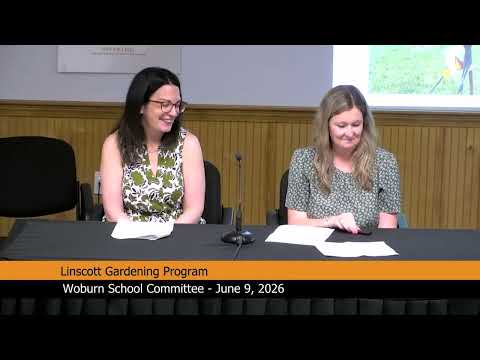
Dr. Crowley introduced a Lindscott Learning Garden presentation at the June 9 meeting, where Amy (elementary reset coordinator) and Sarah Majio (content specialist) described a grant-funded outdoor learning project they developed with staff and community partners.
Amy and Majio told the committee that the garden combines perennial fruit (apple and pear trees, strawberries, blueberries, raspberries) with pollinator plantings to teach life-science standards, math (area, perimeter, growth measurement), social studies and social-emotional skills. Teachers and students—from kindergarten to fifth grade—helped construct beds, move soil and plant the garden; educators used coursework from Framingham State and Fitchburg State as part of their planning and grant proposal work.
Presenters credited a WCEF grant for funding and thanked partners (Mahoney’s for plants and facilities staff for support on water lines and site logistics). They said the garden is designed to be low-maintenance once established and that a summer watering sign-up was being organized with community volunteers. The presenters also described plans for schoolwide vermicomposting and a potential partnership with Black Earth to collect cafeteria food waste in exchange for compost, pending funding.
Committee members praised the project, asked how to scale the model to other schools, and suggested sharing grant-application timing (Ed Foundation, WCEF) and training resources so other schools could replicate the work. Principal Ken Casaris and facilities staff were acknowledged for logistical help.
The committee invited the presenters to return with student participants and harvest samples once the garden produces fruit. The committee also noted the Ed Foundation grant cycle (opens in January) as a funding avenue for future expansion.