Get Full Government Meeting Transcripts, Videos, & Alerts Forever!
Get email alerts on the Utility Transfers topic
No spam. Unsubscribe anytime.
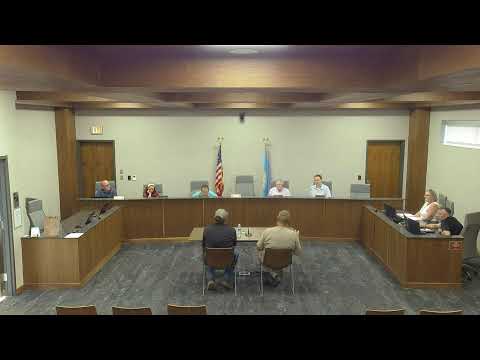
Madison City Commission reviews utility-fund transfers and shared-staff allocations
Summary
At a work session the Madison City Commission examined the city’s longstanding practice of transferring a percentage of utility (enterprise) revenues to the general fund (historically 6.5%, electric resolution allows up to 7.5%) and discussed how shared staff wages are allocated (typical 60% general fund / 40% enterprise split). Staff said each 1 percentage point of the transfer equals about $120,000 and offered to bring rate-study findings into the budget process.
The Madison City Commission spent its June work session weighing whether to formalize longstanding practices for transferring money from the city’s enterprise (utility) funds to the general fund and clarifying how shared staff costs are allocated among funds. Staff told the commission the city has historically transferred 6.5% of utility revenue to the general fund — while the electric fund’s resolution permits up to 7.5% — and that shared positions are typically charged 60% to the general fund and 40% to enterprise funds, with that 40% internally split roughly 65% electric, 20% water and 15% sewer.
Why this matters: changes to the transfer percentage or compensation allocations affect the general fund, utility rates and budget planning. Staff cited a DGR estimate that each 1 percentage-point change in the transfer would be roughly $120,000 — roughly a 1% movement in electric rates for each percentage point shifted — and presented comparative examples from peer cities that use either flat-dollar transfers or percentages.
Jameson, the staff presenter, said the two topics were related but distinct: the payment-in-lieu-of-taxes (the transfer) serves a different purpose than allocating wages for shared services such as finance, human resources and IT. Commissioners asked for clarification about whether the arrangement amounted to a form of double taxation; one commissioner said it “feels like almost a double taxation” because residents pay sales tax on utility bills and the enterprise funds then transfer revenue to the general fund. Staff responded that sales tax is remitted to the state and that the transfer functions to cover general services provided to utilities rather than to replicate those state taxes.
Commissioners also examined peer approaches. Some peer cities use flat-dollar payments; others use a percentage. Staff said a percentage ties the transfer to revenue changes and can be more predictable as revenues rise and fall, while a flat dollar amount offers budgetary certainty but can lag revenue growth. Several commissioners expressed a preference for the percentage approach, and some asked staff to prepare formal resolutions for water and sewer similar to the electric resolution referenced in the packet (electric resolution cited as 2016-12) once rate studies are complete.
On timing, staff said the water and sewer rate study will conclude this year and that the electric rate study is nearing final audits; commissioners requested a September work-session update and integration of rate-study results into the 2027 budget process before setting final transfer percentages. Staff emphasized the commission has flexibility to set the transfer and the compensation allocation independently and recommended keeping the two policies distinct.
The commission did not adopt a new policy at the meeting; instead, members asked staff to draft potential resolution language for water and sewer informed by the rate studies and to return with preliminary findings at an upcoming work session.
Next step: staff will provide rate-study updates and proposed resolution language to help the commission set any new transfer percentages during the budget process.