Get Full Government Meeting Transcripts, Videos, & Alerts Forever!
Get email alerts on the Non Conforming Lots topic
No spam. Unsubscribe anytime.
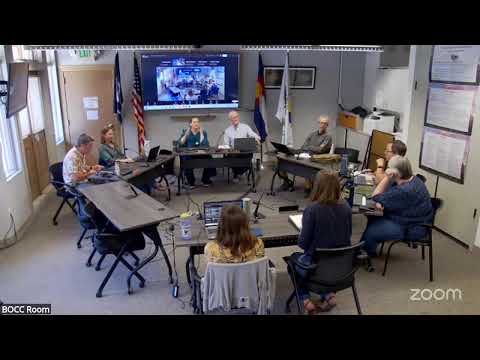
Commission recommends allowing special‑use review for substandard lots after lengthy debate
Summary
After extensive public comment and debate over land‑use rights for hundreds of substandard parcels, the Planning Commission voted to recommend Option Two: allow uses by right and administrative review on legally non‑conforming lots and permit consideration of one‑ and two‑step special use permits with added SUP standards for mitigation.
Planning staff presented proposed language to resolve conflicting provisions in the land‑use code for legally non‑conforming (substandard) lots — parcels created under older plats or statutes that are now smaller than the zone‑district minimum (typically 35 acres). Staff said the current code’s strict reading could limit many routine activities to single‑family dwellings and generate confusion because some zone district sections assume smaller pre‑existing lots may be eligible for additional uses.
Two policy options were presented. Option One would expressly permit uses allowed by right and uses subject to administrative review on legally non‑conforming lots, provided other standards are met. Option Two would do the same and add explicit authority to consider one‑step and two‑step special use permits (SUPs) for non‑conforming lots while adding SUP standards requiring applicants to demonstrate site sufficiency and mitigation of impacts.
Public comment was substantial. Attorney Stephanie Solomon, representing adjacent property owners, urged caution and said the county has roughly "750 substandard size lots throughout the county" that could be affected; she urged more mapping and analysis and questioned whether non‑code remedies had been adequately considered. Local planner Chris Hawkins and neighbor Ken Watt also urged careful standards for cumulative impacts, merger requirements, and protection of neighborhood character.
Commissioners debated tradeoffs for several hours. Supporters of Option Two argued it aligns with the county’s prior practice of allowing SUP review for many small‑lot uses and preserves public notice and mitigation tools; critics warned that simply recognizing broader rights in code could enable uses that neighbors would find incompatible on tiny lots.
After discussion, a commissioner moved and seconded a motion recommending Option Two to the Board of County Commissioners. The chair called the vote and announced the motion passed; commissioners stressed that SUP review and mitigation standards will be key to protecting neighbors and that further code refinements and zone‑by‑zone analysis could follow.
What happens next: The Planning Commission’s recommendation will be forwarded to the BOCC for a public hearing and final decision. Staff indicated additional follow‑up work (clarifying merger language and considering targeted carve‑outs) may be needed.