Get Full Government Meeting Transcripts, Videos, & Alerts Forever!
Get email alerts on the Budget topic
No spam. Unsubscribe anytime.
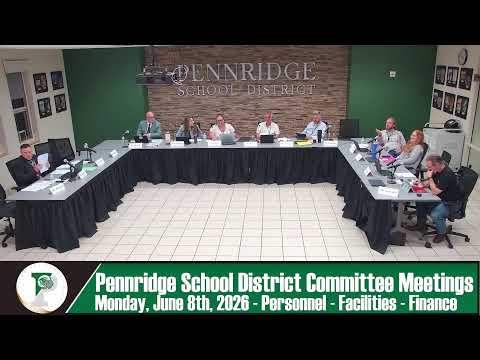
Pennridge budget gap, proposed real‑estate tax increase and charter costs dominate finance discussion
Summary
The finance committee reviewed a draft 2026–27 general fund budget that includes a 3% proposed real‑estate tax increase, $7.3M in expenditure cuts, transfer reductions to capital, and an estimated $3M outflow for charter‑school tuition; public commenters urged deeper staffing review before raising taxes.
The finance committee spent the bulk of its time on the final general‑fund budget for 2026–27. Finance staff presented revenue and expenditure assumptions, explained a modeled 3.0% real‑estate tax increase included in the draft and described more than $7.3 million in line‑item reductions already taken during the budget process.
Finance staff warned of two structural headwinds: a projected shortfall of roughly $1 million in interest income compared with prior expectations because of lower market rates, and ongoing, state‑level constraints that have limited increases in education aid. The presenter summarized that the revised budget shows local revenues near $122 million, state property‑tax relief of about $4.158 million, and a projected use of reserves to cover gaps in 2025–26 and into the new year.
Public commenters during the finance session urged the board to fully explore staffing and administrative adjustments before pursuing a tax increase. One commenter asked for teacher‑to‑student ratios and administrative‑to‑teacher ratios and urged caution about permanent tax increases when temporary measures or retirements might bridge gaps.
Board members probed strategies including monthly dashboard metrics, multi‑year (three‑year) projections and a stronger public explanation of how fund balance would be used. Finance staff explained a proposed accounting move to transfer a previously committed reserve (the “peasers” commitment, about $2.7 million) to unassigned fund balance so the district’s unassigned balance would be approximately 7.71% of the next year’s general‑fund budget; they said that reserve was created years ago for pension volatility and has been drawn down to cover recent shortfalls.
The committee also reviewed charter‑school tuition impacts and per‑student rates reported by category: brick‑and‑mortar special‑education tuition (~$43,400 per student), cyber special‑education (~$30,590), brick‑and‑mortar general‑education (~$17,400) and cyber general‑education (~$16,185). Staff estimated charter outflows of roughly $3 million and discussed recruitment to the district’s own Penridge Cyber offering as partial mitigation.
There were no formal votes reported in committee; staff said the board is scheduled to adopt a final budget and homestead/farmstead resolution at the full board meeting on June 15. Board members asked staff to return with clearer monthly monitoring metrics and three‑year budget projections to show how proposed staff adjustments and other savings would close multi‑year gaps.
Next steps: staff to finalize the budget package for formal action on June 15, prepare monthly dashboard materials for ongoing monitoring, and explore additional outreach and options to limit long‑term reliance on permanent tax increases.