Get Full Government Meeting Transcripts, Videos, & Alerts Forever!
Get email alerts on the Battery Energy Storage topic
No spam. Unsubscribe anytime.
County adopts 10-month moratorium on large battery storage projects while drafting local safety rules
Summary
San Benito County’s Board of Supervisors voted unanimously to adopt an urgency ordinance extending a temporary moratorium on new battery energy storage system (BESS) applications while staff finalizes local safety and permitting standards. Supporters said the pause will allow the county to write rules that preserve local control; opponents warned long delays could push projects to state permitting.
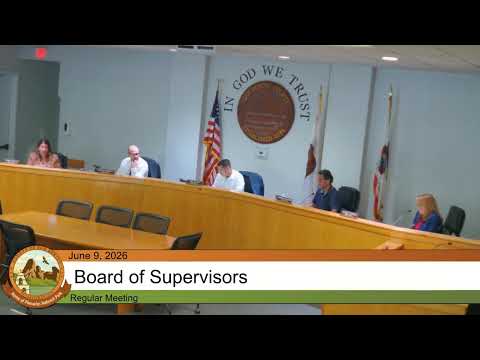
San Benito County’s Board of Supervisors on June 11 adopted an urgency ordinance extending a temporary moratorium — up to 10 months and 15 days — on acceptance, processing and approval of battery energy storage system (BESS) applications in the unincorporated county.
The vote followed a multi-hour staff presentation and widely attended public hearing. RMA staff described draft ordinance language under development that addresses technical definitions, siting rules, fire‑safety systems, emergency response planning, operator reporting and financial assurance for decommissioning. RMA warned that modern lithium‑ion installations carry acute risks — including “thermal runaway,” a cascade of overheating cells that can produce fire and toxic gases — and cited incidents such as the Moss Landing and Otay Mesa fires in recent years as drivers of local caution.
“Thermal runaway occurs when battery cells experience an uncontrolled increase in heat and temperature that can lead to fires, the release of hazardous gases, and propagation to adjacent battery cells,” RMA staff said in the presentation.
Public commenters were sharply divided. Environmental and reliability advocates urged local standards so the county retains a voice. “Energy storage is a critical tool” that strengthens local reliability and resilience, said Sophia Schwarzky of Central Coast Community Energy (3CE). Industry representatives and project developers said an extended pause could simply shift projects to state permitting pathways under the California Energy Commission, removing local discretion. “A pause is not how you protect local control,” said Leslie Austin of a regional environmental justice group, who urged interim standards rather than a long pause.
Scott Murder of the California Energy Storage Alliance urged the board to adopt interim ordinances quickly and said model ordinances and state guidance can be used as a starting point. Labor and construction representatives pressed for certified contractors and training requirements. Several speakers urged that any local rules also include community benefit and workforce provisions.
County counsel and planning staff told the board that a local ordinance, once adopted, becomes part of the record and will be considered if a project applies for state approval. Counsel said the state permitting route remains available to applicants at any time but that having a local ordinance gives San Benito County leverage in conditions and mitigations the state may impose.
The board directed staff to present a draft ordinance to the Planning Commission on June 17 and return to the board on June 23. In the meantime the board adopted an urgency ordinance extending the moratorium so staff can finish technical reviews and solicit further public input. The roll-call vote on the moratorium ordinance was unanimous (5–0).
What happens next: staff told the board they will continue technical coordination with local fire and environmental health officials, incorporate national standards (NFPA/UL/other guidance), and consider retaining outside technical experts to validate safety, decommissioning and emergency-response requirements. The county also plans public outreach sessions during the ordinance drafting process to address community concerns about siting, farmland impacts and revenue.