Get Full Government Meeting Transcripts, Videos, & Alerts Forever!
Get email alerts on the Privacy Alpr topic
No spam. Unsubscribe anytime.
Resident calls Warren ordinance banning private ALPRs an overreach; council fails to advance measure
Summary
A resident urged Warren Town Council to table a proposed ordinance restricting automated license-plate readers on private property, calling it unenforceable and a threat to property rights; council took public comment and debated the measure but a motion to approve second reading failed 3–1.
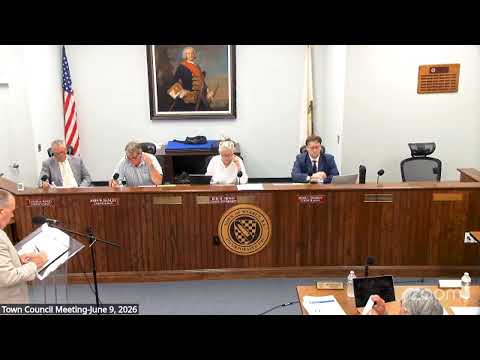
A Warren resident told the Town Council June 9 that a proposed ordinance barring automated license-plate readers (ALPRs) on private property is an overreach that would be difficult to enforce and could strip property rights.
"This ordinance is a severe overreach of property rights, is completely unenforcable, and exposes the town to unnecessary legal liabilities," Jeffrey Smith of 14 Barney Street told the council during public comment. Smith, who said he has more than 25 years in municipal government, argued placing enforcement under the building code would require intrusive inspections of home cameras, computers and internet usage and that modern cameras plus AI make plate-reading capabilities increasingly common.
The ordinance (Chapter 4, Article 10, Section 4-19) was introduced earlier to restrict ALPR use on private property. Council members discussed whether to continue the item to next month for revisions after receiving public testimony. Councilman Trombbley moved to continue the matter to the July meeting; that procedural motion tied and failed, and a subsequent motion to approve second reading was moved and did not pass. Council recorded the final vote as 3 to 1 against the second-reading motion, and the ordinance did not advance that evening.
Supporters of stronger restrictions have framed the measure as a privacy-protection tool for people traveling on public ways; opponents, including Smith, said the ordinance as written could be impossible for the building inspector to enforce and risk unintended consequences such as blanket bans on ordinary security cameras.
Council members discussed options for amendment and the mechanics of reconsideration under Robert’s Rules. Several councilors signaled they want further drafting and staff input before the matter returns. The council did not adopt any interim enforcement changes at the meeting.
The council heard public comment and took no final adoption action on June 9; members noted they could revisit the ordinance at a future meeting if a sponsor offers revised language.