Get Full Government Meeting Transcripts, Videos, & Alerts Forever!
Get email alerts on the Budget topic
No spam. Unsubscribe anytime.
Folsom council adopts FY26‑27 budget after extended debate over CalPERS, OPEB and zoo costs
Summary
The council adopted the FY26‑27 operating and capital budgets, and heard detailed briefings on CalPERS and OPEB liabilities and a Parks & Recreation presentation on Folsom Zoo finances; councilmembers debated whether to accelerate pension/OPEB catch‑up and how to sustain the zoo without large general‑fund subsidies.
The Folsom City Council on Tuesday adopted Resolution 11645, approving the city’s FY26‑27 operating and capital budgets after a lengthy public hearing and debate over long‑term pension and retiree health liabilities and the financial sustainability of the Folsom Zoo Sanctuary.
Stacey, the city’s chief financial officer, presented the proposed budget and a long‑term liabilities briefing showing the city’s CalPERS unfunded accrued liabilities (UAL) and OPEB exposure. She told the council that the safety plan’s accrued pension liability was reported at roughly $290 million with a funded ratio near 64 percent and that the city’s OPEB unfunded liability was about $102 million with a trust fund balance of approximately $13.6 million as of April.
"Pension contributions are expected to peak in fiscal year 2030–31," Stacy said, noting that actuarial assumptions and investment returns determine the pace of required contributions and the projected payoff timeline.
Councilmembers pressed staff on whether the city should accelerate contributions to either CalPERS or the OPEB trust. Councilmember Rohrbough and others urged a systematic plan to increase trust funding and to consider creating a dedicated reserve or 600‑series “lockbox” to build resources for long‑term liabilities. Staff recommended continuing the current approach, including a proposed $500,000 annual contribution to the OPEB trust and exploring a locked funding strategy over time.
Parks and Recreation Deputy Jamieson Larson presented a detailed review of the zoo’s operating costs and revenue. Jamieson said the zoo has 76 animals and identified the highest direct animal costs (bears, mountain lions, draft horses) and estimated the combined annual direct cost for those high‑cost animals at about $274,000 (salaries, veterinary care, food and facility needs), excluding shared overhead. He described ongoing efforts — including a Friends of the Folsom Zoo capital campaign that raised more than $202,000 for a new veterinary building — and said staff and the Friends will return in the fall with an economic development and sustainability plan with recommendations for revenue and partnership strategies.
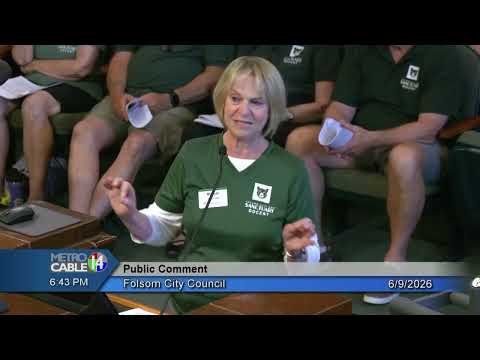
Friends of the Folsom Zoo president Peggy Plett urged the council to view the Friends’ fundraising and partnerships as part of the plan: "In the past 20 years, we have contributed over $2.5 million," she said, describing partnerships with local businesses and targeted campaigns for capital and programmatic needs.
Councilmembers debated whether to adopt a lower budget consistent with last year’s adopted subsidy level or to accept the staff adjustments while commissioning a fall workshop on zoo sustainability and the consultant’s economic development recommendations. Several members stressed the importance of using updated revenue actuals: staff told the council that zoo revenues are running above budget, with ticket sales and total revenue year‑to‑date exceeding projections (ticket sales budgeted at $550,000 and at $686,000 actual as of the morning of the meeting, and overall zoo revenue budgeted at $955,600 vs. $1.23 million actual to date).
After questions and public testimony, the council voted to adopt the FY26‑27 budget. Staff said they will continue to report back with midyear updates, the consultants’ sustainability plan for the zoo in the fall, and further options for building reserves for pensions and retiree health benefits.