Get Full Government Meeting Transcripts, Videos, & Alerts Forever!
Get email alerts on the Land Use topic
No spam. Unsubscribe anytime.
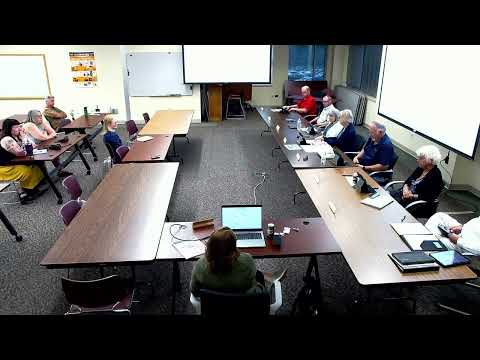
McHenry County board keeps 6‑inch wildlife pass‑through and approves amended conditions for Pivot Energy solar project
Summary
After testimony from the applicant, county experts and residents, the McHenry County Zoning Board of Appeals voted to retain the Illinois Department of Natural Resources’ 6‑inch wildlife pass‑through recommendation for perimeter fencing while adopting updated IDNR guidance on tree‑clearing timing for Pivot Energy’s already‑approved solar farm.
The McHenry County Zoning Board of Appeals on Tuesday considered a request from Pivot Energy IL78 LLC to amend two conditions on an already approved solar conditional‑use permit, including replacing the IDNR consultation date with a March 30, 2026 letter and removing a 6‑inch ‘‘wildlife pass‑through’’ gap requirement at the bottom of perimeter fencing.
Britney Ksbach, representing Pivot Energy, told the board the company seeks flexibility to allow species surveys and mitigation immediately prior to construction if clearing falls within the April 1–Oct. 31 active season. She said the IDNR guidance is ‘‘recommendations, they’re not requirements,’’ and that the firm’s grazing partners report a persistent 6‑inch gap prevents safe sheep grazing, which Pivot uses for vegetation management.
Scott Kendall, the county’s water resources specialist, said the site’s proximity to Cotton Creek Marsh increases the likelihood that Blanding’s turtles or other flagged species would use the area for travel or nesting and recommended keeping the 6‑inch opening unless the applicant can propose an alternative that demonstrably preserves passage. Kendall said the risk is one of habitat fragmentation rather than an isolated mortality risk and urged the applicant to carry the burden of proof for any substitute solution.
Board members, staff and public commenters pressed Pivot on operational experience and mitigation options. The applicant described common on‑site practices—temporary interior fencing to concentrate grazing, collars for individual animals, and flip‑mesh fence designs—but said some measures are cost‑prohibitive for small grazing operators. County staff confirmed the site would be subject to native‑vegetation and building‑permit review and that species surveys and reporting to IDNR would occur when required.
Residents raised neighborhood concerns separate from the fence debate. Michelle Asclan, who lives near the project, urged the board to require preservation of a mature tree line along Roberts Road to screen an adjacent truck yard, saying removal would harm the neighborhood’s enjoyment and property values. The Environmental Defenders of McHenry County also urged adherence to the IDNR recommendations.
After extended discussion and testimony from the applicant and county experts, the board voted to retain the IDNR‑recommended 6‑inch pass‑through requirement. The board reported the motion to keep the 6‑inch wildlife gap passed by a 6–1 margin. The board then approved the amended conditions (including adoption of the March 30, 2026 IDNR consultation letter language on tree‑clearing time windows and other protections) on a separate roll call; the conditions themselves were adopted by a unanimous vote recorded by staff.
Votes at a glance
• Keep 6‑inch wildlife gap requirement (motion recorded as to retain IDNR recommendation): passed, 6–1 (one dissent). • Approve amended conditions incorporating the March 30, 2026 IDNR consultation letter (tree‑clearing timing, species survey protocol, erosion‑control recommendations): passed, unanimous roll call.
Context and next steps
The board emphasized that the hearing concerned only amendments to permit conditions; the county previously approved the solar farm’s CUP (CUP 2024‑037) and the project’s application number before the board is Z260026. Pivot said the lease for the site is initially 20 years with options extending the term (the company stated an intended 40‑year total tenure if options are exercised). The applicant also said the project footprint is roughly a 20‑acre installation and that grazing density would be about one to two sheep per acre during the growing season (roughly May–October), numbers the company described as approximate and subject to change.
County staff and IDNR retain oversight responsibilities: species surveys must be submitted and reported to IDNR when clearing or soil disturbance occurs during the active season, and the IDNR consultation letter reiterates that no take of listed species is permitted without proper authorization.
The board closed the hearing after voting on the conditions.
Quoted or paraphrased sources are limited to speakers who addressed the board during this hearing.