Get Full Government Meeting Transcripts, Videos, & Alerts Forever!
Get email alerts on the Public Comment Process topic
No spam. Unsubscribe anytime.
Teachers and residents criticize pace and transparency of staffing changes at South Country budget hearing
Summary
Multiple teachers and parents used the June 9 public comment period to challenge the board's communication and handling of excess notices, urging more transparency and creative alternatives to preserve experienced classroom teachers.
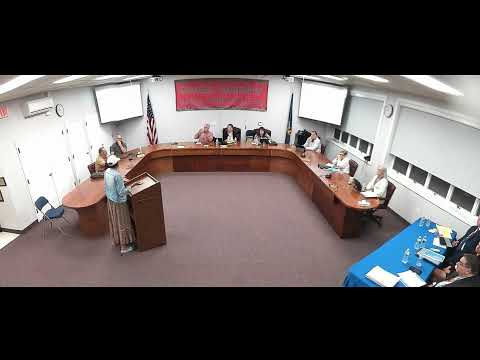
During the public-comment portion of the June 9 budget hearing, teachers and residents delivered several emotional and detailed appeals asking the board to reconsider how staffing changes were communicated and implemented.
Dr. Mary Pettit, who identified herself as a 28-year district teacher, said many employees learned about job decisions from agendas and social media before receiving direct notice and described the process as lacking respect and transparency. "When employees learn life-changing information through agendas, public meetings, rumors and speculation before receiving clear answers themselves," she said, "it becomes difficult to reconcile those experiences with the transparency we have been promised."
Several comments underscored the human impact of reductions: Carrie Pillo, a 12‑year literacy coordinator at Frank P. Long, described the central role classroom teachers play in students' daily instruction and urged the board to explore creative reallocations of existing funds to retain experienced teachers. Public commenters also pressed for details on dual‑language transportation costs and requested the district work with community nonprofits (for example, an education foundation) to coordinate equitable fundraising if programs need outside support.
During a back-and-forth, a resident asked why kindergarten class sizes were not equalized across buildings and whether reconfiguration studies (previously discussed in advisory conversations) could be accelerated to reduce uneven enrollment pressure. Administrators said grade-reconfiguration studies are under consideration for a later planning cycle but were not scheduled for immediate implementation for 2026–27.
The public session closed after roughly a dozen speakers raised process concerns, asked for clearer timelines, and urged collaborative solutions to preserve instruction and programming ahead of the June 16 vote.
The board did not adopt immediate procedural changes during the meeting; several members acknowledged the emotional toll of staffing notices and indicated administrators would continue to study options and grant-funded or community-supported approaches.