Get Full Government Meeting Transcripts, Videos, & Alerts Forever!
Get email alerts on the Public Comment topic
No spam. Unsubscribe anytime.
Residents press Grant County panel on noise, water and property impacts at data‑center ordinance meeting
Summary
At a Grant County subcommittee hearing, residents criticized the draft data‑center ordinance for insufficient protections against continuous cooling noise, heavy water use and potential property‑value loss; the panel requested technical studies and moved several draft safeguards forward for further analysis.
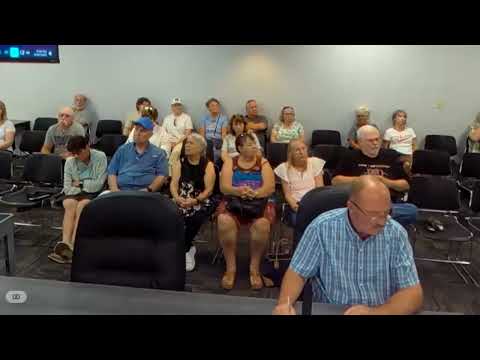
Grant County residents pressed a volunteer subcommittee on June 12 to strengthen protections in a draft data‑center ordinance, focusing on continuous noise from rooftop cooling equipment, potential water withdrawals and the possibility that nearby properties could lose value.
Public comment opened after the subcommittee finished the lighting and screening section; several speakers described anticipated harms and asked the panel to make the draft more protective. Dave Stanley, who grew up in the county, told the group he doubted that berms and early plantings would muffle noise from equipment 30–40 feet above grade, saying the humming could disturb sleep. Rhonda Coleman said online videos show persistent lighting and argued such facilities could depress local property values.
Multiple commenters pressed the committee on water. Russell Sheets and others cited actions in other states that curtailed or studied data‑center permits over water and wastewater concerns. The committee referenced previous meetings in which closed‑loop cooling and wastewater containment were discussed as ways to limit groundwater withdrawal and manage effluent; staff said these matters will be part of later draft sections.
On remedies, residents urged the subcommittee to require: solid acoustic screening (earth berms plus solid fencing or rooftop acoustic treatments), rigorous irrigation and plant‑establishment plans that minimize additional groundwater demand, and financial guarantees to cover property‑value claims or decommissioning. Speakers asked who would pay for appraisals and how a homeowner would exercise the right to a buyout or compensation if value declined.
Committee members responded that the draft contemplates appraisal baselines (to be set before construction in some provisions) and that the developer would fund required appraisals and publication/posting costs for notices. The panel debated path(s) for recovering verified losses: either paying the difference between baseline and market value at sale (adjusted for inflation) or buying the affected property. Members agreed homeowners should be able to choose which remedy to accept, and they requested staff guidance on appraisal mechanics, inflation adjustment, and dispute processes.
Speakers also pressed the committee to consider long‑term risks: a short useful life for a data center could leave an empty structure or contamination risks decades later. Some residents asked that guarantees and decommissioning bonds remain in force for many years or that decommissioning funding be required up front. The committee acknowledged that those concerns factor into bond sizing and decommissioning language later in the draft.
The subcommittee did not adopt a final numeric formula for property‑value guarantees; a proposed approach in the draft to require a pooled security equal to a percentage of aggregated assessed values (a 3% figure had been used as a placeholder) prompted questions about adequacy and was referred for staff analysis. The group did move discussion toward a 5‑mile radius for potential claims (up from an initial 3‑mile placeholder) so that bond sizing would capture a wider pool, but members said the exact pooling methodology, thresholds for proven loss and timelines for claims require legal and actuarial review.
The panel emphasized its limited jurisdiction: it can set rules for the unincorporated areas of Grant County but cannot impose ordinance requirements within incorporated towns such as Marian and Gas City. Members urged residents worried about municipal decisions to engage their town boards, while promising to incorporate public concerns into the county recommendations that will go to the APC and commissioners.
The subcommittee requested staff return with technical research (acoustics, irrigation and plant species, water‑use calculations, appraisal methodologies and bond sizing) and scheduled a follow‑up meeting to resume page‑by‑page review. Residents were told the APC public hearing and county‑commission review remain the next formal steps for any ordinance the committee ultimately recommends.