Get Full Government Meeting Transcripts, Videos, & Alerts Forever!
Get email alerts on the Budget And Finance topic
No spam. Unsubscribe anytime.
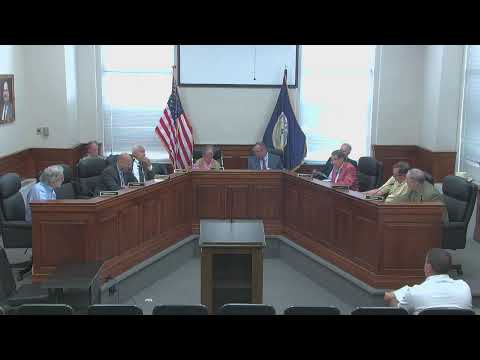
Clark County Fiscal Court approves budget and cash transfers, sets special June 29 meeting for budget second reading
Summary
The Clark County Fiscal Court approved a set of budget and cash transfers (including newly added transfer E), approved minutes from May 28, and scheduled a special called meeting for June 29 at 5:30 p.m. for the second reading of the capital budget.
The Clark County Fiscal Court voted Wednesday to approve multiple budget transfers and listed cash transfers and to schedule a special called meeting for June 29 for a second reading of the county's capital budget. The court added budget transfer E to the agenda before taking voice votes to pass transfers A–G and the cash transfers.
After a brief discussion about packet differences and added items, Magistrate Costopoulos moved to include transfers F and G; the motion was seconded by Councilman Stubbs and carried by voice vote, with one magistrate recorded as opposed at one point. The clerk recorded approval of the cash transfers and a minutes list later in the meeting; motions to approve were seconded and carried by voice vote.
The court set a special called meeting for Monday, June 29, at 5:30 p.m. to conduct the second reading of the capital budget after noting scheduling conflicts among several magistrates. The scheduling was announced by the presiding official and accepted by the assembly.
No formal roll-call tallies were presented in the record for the budget-transfer votes; the minutes reflect voice approval. The court then moved into other agenda items, including committee reports and contract approvals.
The court adjourned the public portion of the meeting and entered closed session under state law to discuss specified location and personnel matters.