Get Full Government Meeting Transcripts, Videos, & Alerts Forever!
Get email alerts on the Assessment Reform topic
No spam. Unsubscribe anytime.
Representative outlines base-year assessment plan to reduce volatility and shift trade-offs to local officials
Summary
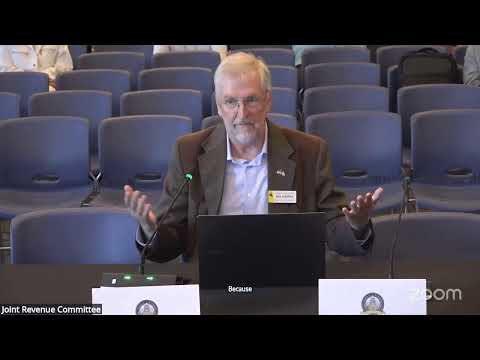
Representative Chesnik proposed a base-year (frozen) assessment model: perform a countywide fair-market reassessment on a chosen base year, freeze assessed values for a multi-year period, allow local officials mill flexibility during that period, then revalue and require mill adjustments at the reassessment to limit sudden tax shocks.
Representative Chesnik proposed a structural change in how Wyoming values residential property: adopt periodic base-year assessments with frozen values between reassessments.
"Pick a year. So one year you do a countywide reassessment at fair market value. Everybody gets assessed at the same fair market value for a year and then you freeze assessments at that base year for some period of time," Chesnik told the committee. Under the concept he outlined, counties would perform a thorough reassessment on the base year, then values would be held constant for a fixed interval (for example, five years). New construction and significant additions would be added using base-year cost factors. Local taxing authorities would retain mill-setting authority and would be expected to manage budget trade-offs locally rather than the state ad hoc relief programs creating uneven outcomes.
Chesnik argued the approach would remove annual market-driven inflation from homeowners' tax bills and move hard choices about services and local revenue to local elected officials. Committee members asked how schools would be treated, whether reassessments should be staggered across counties or synchronized, and what constitutional changes would be required. Chesnik acknowledged the proposal likely would need a constitutional amendment and recommended forming an interim working group of stakeholders (assessors, county commissioners, school officials, department staff and legislators) to study design, thresholds for reassessment, and voter or local-approval mechanisms for mill changes.
Members agreed the idea merited further study and asked Chesnik and staff to return with a more formal proposal and examples from other states to assess implementation challenges and constitutional implications.