Get Full Government Meeting Transcripts, Videos, & Alerts Forever!
Get email alerts on the Zoning Rural Conservation topic
No spam. Unsubscribe anytime.
Waynesville council adopts voluntary rural‑conservation zoning district
Summary
The Waynesville Town Council adopted a text amendment creating an owner‑initiated Rural Conservation district to enable lower‑density, conservation‑oriented development on willing properties; the planning board had recommended the measure 6–3.
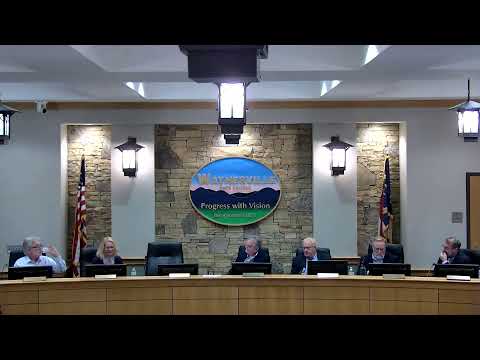
Waynesville’s Town Council on June 9 adopted a text amendment to add a voluntary, owner‑initiated Rural Conservation district to the town zoning code, a change staff said is consistent with the town’s 2035 comprehensive plan.
Town planner staff described the new district as an option property owners may elect to request. Under the adopted wording, the district establishes a base density of 2.5 units per acre, allows up to six units per acre through a special‑use permit, sets a default minimum lot size of one‑half acre and permits a conservation‑design alternative with 4,000‑square‑foot lots if the development preserves at least 40% of the site as civic or open space. The amendment caps building height in the district at 45 feet, emphasizes conservation subdivision and cottage‑court standards, and lists agricultural and the same uses already allowed in low‑density residential zones.
Staff told the council the planning board recommended the text amendment by a 6–3 vote after a multi‑year working group reviewed areas identified on the future land‑use map for potential density reduction. Staff also explained a 2024 state omnibus law prevents local governments from unilaterally downzoning property without the property owner’s initiation; the adopted text is explicitly owner‑initiated to comply with that state constraint.
During the public hearing, Town Attorney Don Smart said he supported the measure as a practical way to help preserve farmland and open space within town limits. Resident Mandy Sauy urged the council to approve the district to protect family farms and the town’s mountain character, saying “once farmland and open space are gone, they are not recoverable.”
Councilmember Anthony moved to find the amendment consistent with the comprehensive plan and, after further motions and a second, the council voted to adopt the amendment. The mayor declared the ordinance in effect at the meeting’s close.
What happens next: Because the district is owner‑initiated, individual property owners or groups of owners must petition to receive the Rural Conservation district designation; the text amendment itself does not rezone any parcel without owner consent.