Get Full Government Meeting Transcripts, Videos, & Alerts Forever!
Get email alerts on the Fy27 Budget topic
No spam. Unsubscribe anytime.
Senate EPW Questions Fish and Wildlife Director on FY27 Budget, Staffing Losses and IPaC Access
Summary
At a Senate Environment and Public Works Committee hearing, Fish and Wildlife Director Brian Nesvik defended a $1.3 billion FY2027 budget request focused on faster ESA consultations and refuge investments while senators warned proposed cuts to staff and state and tribal grants would undercut conservation work and permitting.
At a Senate Environment and Public Works Committee hearing, Brian Nesvik, director of the U.S. Fish and Wildlife Service, defended the Trump administration—s FY2027 budget request and outlined plans to speed endangered-species consultations and invest in refuges while facing sharp questioning over staffing losses and proposed grant eliminations.
Nesvik told the committee the FY27 request totals $1.3 billion and seeks "an increase of 5.1 million for ESA section 7 consultations for energy projects," saying the Service expects to "reduce consultation time frames from 30 to 14 days" for informal reviews and shorten formal consultation windows as well. He additionally cited proposed increases for recovery planning, refuge visitor services and law enforcement.
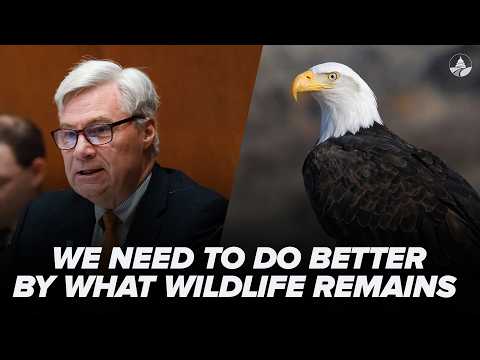
The budget and staffing picture drew immediate pushback. Ranking Member White House said the Service has been hurt by what he described as recent personnel departures and proposed reductions, asserting that the agency "has lost as much as a quarter of its staff," and that "purging at least 530 biologists and over 100 regional senior staff" has reduced institutional expertise. "These people cannot be readily replaced," he said, warning the loss will hamper permitting and conservation work.
Several senators pressed Nesvik on how the Service will reconcile shorter consultation timelines with the reported staffing shortages. Nesvik said the Department of the Interior and the Service are "aligning our workforce with available resources" and pursuing a refuge review to put "boots on the ground" where needed, but he declined to give precise national percentages for shuttered or understaffed refuges at the hearing.
IPaC (Information for Planning and Consultation), the Service—s permitting-planning tool, drew sustained attention. Senators praised IPaC—s ability to speed decisions in some states and asked whether the restored timelines would apply to wind and solar projects. Nesvik said IPaC "has been a gamechanger," that there is widespread interest in improving it, and that projects submitted through IPaC would receive the same timeline goals. He also acknowledged that an administration review had temporarily limited some energy proponents— access and that courts have required restoring access in some cases.
Legislative and program concerns threaded through the hearing. The committee chair flagged a D.C. district court decision that vacated a 2020 programmatic biological opinion governing consultations for Office of Surface Mining mining activity in primacy states, asking whether the Service would work with OSM, states and industry to avoid delays; Nesvik said DOI and the Service were studying options but had no specific plan to present that day.
Multiple senators also urged Nesvik to reverse a proposal in the FY27 budget to eliminate State and Tribal Wildlife Grants, a program they said funds pre-listing conservation and local habitat work. "This popular program is being cut," said one senator, who asked what states should do to replace those funds; Nesvik replied that the cut was a hard choice tied to the administration—s fiscal priorities and suggested states and NGOs would need to help fill gaps.
Committee members raised invasive-species and refuge-management issues as well. Senators warned of the risks posed by invasive carp and the recent discovery of golden mussels, and asked how the Service is coordinating inspections, decontamination, grants, and new technologies such as genomics for long-term control. Nesvik described ongoing state partnerships, grant support and the Service—s invasive-species task force.
Several senators pressed for clearer metrics on recovery and delisting. When asked about slow historic delisting rates and specific species such as the pallid sturgeon, Nesvik said the Service intends to apply the same five-factor analyses used for listing when considering delisting, and to prioritize resources for species needing active recovery.
The hearing concluded with administrative instructions: senators may submit written questions for the record by 5:00 p.m. Wednesday, June 24, and the Service—s responses are due by 5:00 p.m. Wednesday, July 8. The committee adjourned without any votes or formal actions at the hearing.
The testimony documented stark tensions between committee members who urged preserving grant programs and staff capacity and administration officials who defended a budget that trims some federal programs while funding faster permitting and refuge infrastructure.