Get Full Government Meeting Transcripts, Videos, & Alerts Forever!
Get email alerts on the State Lands Sublease topic
No spam. Unsubscribe anytime.
Committee advances bill clarifying subleasing rules for state trust lands
Summary
Senate File 16, which clarifies sublease options for state trust lands and adds practical alternatives such as a flat per-head fee, was advanced after testimony from the Office of State Lands and Investments and agricultural stakeholders.
The committee advanced Senate File 16, a bill that clarifies how non-owned livestock grazing and subleasing on state trust lands are handled and provides alternative compliance options for lessees.
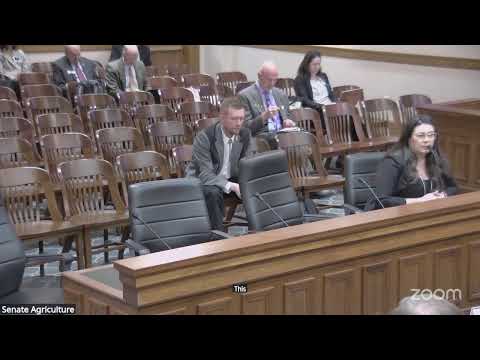
Kate Barlo, deputy director of the Office of State Lands and Investments, told the committee OSLI supports the bill and is ready to implement it if passed. Jim McGagna of the Wyoming Stock Association described three common situations the bill addresses — retaining the prior board-approved sublease with a share of net gains, an opt-in flat per‑head fee to avoid complex net-income accounting, and treatment of corporate ownership structures used for succession or tax planning that previously triggered sublease rules. "This provides an opportunity to avoid that by paying a flat per head fee," McGagna said.
Supporters said the measure will reduce administrative burdens and provide clearer, more practical options for ranchers who run non-owned livestock on state parcels — an issue that has created compliance challenges and litigation concerns in some cases.
The committee moved and seconded the bill and conducted a roll-call vote; five members recorded 'I' votes and the measure advanced.
The bill preserves the board's authority to require prior approval and revenue sharing where appropriate but adds clear alternatives (flat fees and clarified corporate-ownership rules) intended to simplify compliance and reduce contentious re-interpretations of the current statute.