Get Full Government Meeting Transcripts, Videos, & Alerts Forever!
Get email alerts on the Edtech topic
No spam. Unsubscribe anytime.
Parents press district over AI-generated images and student-data sharing in edtech
Summary
At the June 9 Issaquah School District board meeting, parents and students raised concerns about AI-generated images in elementary edtech tools and possible third-party data sharing, asking for audits, opt-outs and reduced elementary screen time.
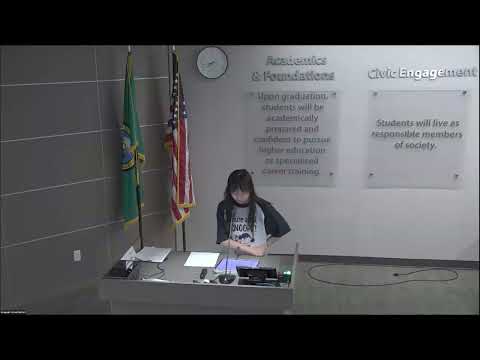
Parents and students used the public-comment time at the Issaquah School District board meeting on June 9 to press the district for clearer rules and more transparency about classroom technology, particularly at the elementary level.
Allison, a parent who said she has children at Apollo, described an image returned by a classroom "book creator" tool she called inappropriate for a second grader and said the program was using AI. "This image was given to me by a mother at Apollo. Her daughter is a second grader and she was utilizing the edtech program book creator. She typed in 'Egyptian queen' and was given this historically inaccurate and rather inappropriate image for a second grader," Allison said during public comment. She asked the district to "reconsider your relationship with edtech," especially for younger students, and to provide more analog options.
Other parents at the meeting echoed concerns about content and data. Erica, speaking online, said her kindergartner regards some district learning apps as games and worries parents that the programs are not serving learning goals. "They're great," she recounted her child saying of I-Ready, "but they're just meant for playing." Kathy Jurich urged a full audit of elementary edtech tools and more transparency about how much screen time elementary students spend in class. Multiple commenters cited privacy research during remarks: Allison referenced third-party reports, saying, "according to Human Rights Watch, 89% of 163 edtech programs were found to be in violation of children's information privacy rights," and that Internet Safety Labs found many K–2 apps sharing data with third parties.
Speakers framed their requests as specific, actionable steps: roll back or limit AI-enabled features in elementary programs, create opt-out options for families, commission an audit of the district's edtech inventory and data flows, and report how much class time students spend on digital programs. Several parents said they feel the district has not yet adequately answered these concerns.
The board did not take action during the public-comment period. District administrators heard the comments; subsequent agenda items did not record an immediate policy response during the meeting. The concerns raised will likely return to staff for follow-up, including whether a formal audit or presentation to the board is required.
What happens next: Parents asked the board to require an audit and an opt-out policy, and several directors asked staff follow-up questions later in the meeting. The district's technology and policy teams should be expected to report back through the board's normal agenda or a future committee meeting.