Get Full Government Meeting Transcripts, Videos, & Alerts Forever!
Get email alerts on the Municipal Court topic
No spam. Unsubscribe anytime.
Lewisville council hears municipal court briefing; prosecutors urge major rewrites to animal, nuisance and traffic codes
Summary
At an Oct. 14 special meeting, Lewisville municipal court leaders reported 1,391 violations in 2024 and urged council to prioritize code revisions — especially animal-impound rules, nuisance enforcement and updating the model traffic code — to give police and court staff tools to protect public safety.
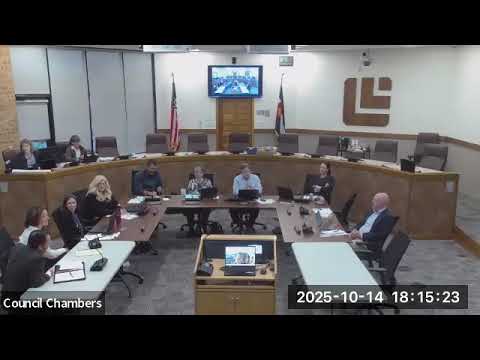
The Lewisville City Council on Oct. 14 received a detailed municipal court update in which the judge and municipal prosecutor described caseload trends, sentencing practices and a list of recommended ordinance revisions aimed at boosting public safety and effective enforcement.
Municipal court staff reported 1,391 total violations in 2024 and 978 year-to-date in 2025, with parking and moving violations making up the largest shares. The judge noted that many speeding cases are resolved administratively but that moving violations remain the court’s most frequent traffic docket.
Municipal prosecutor Trisha McCarthy told council that the city’s animal-control provisions (Title Six) are “in desperate need” of overhaul because current language restricts impoundment and limits officers’ ability to act in serious bite cases. McCarthy recounted a recent three-bite incident involving two German shepherds that resulted in serious injury and said the code left prosecutors and police without clear authority to impound the animals promptly. She recommended clearer impound standards, temporary abatement authority, and faster timelines for impound hearings.
McCarthy also described an ongoing working relationship with the Boulder Valley Humane Society, which the prosecutor said provides in-depth evaluations and tailored recommendations for individual bite cases; she said those evaluations often inform court orders that favor training and rehabilitation where appropriate.
On traffic policy, presenters urged updating Lewisville’s adoption of the 2010 model traffic code to a more current version (2020/2024) to reflect modern enforcement tools and to clarify how ebike and bicycle incidents should be charged. The prosecutor and judge emphasized that existing mechanisms can address many ebike collisions (careless driving and related charges) but said the city benefits when schools, police and courts coordinate to ensure juvenile riders receive education as part of problem-solving sentences.
Council members asked about staffing and process improvements. Presenters recommended instituting fingerprinting for criminal bookings so arrests and criminal histories reliably appear in state records, and discussed the court’s hybrid electronic docketing system used to archive records and enter real-time sentence information.
The prosecution and the bench also described restorative options: deferred judgments and deferred prosecutions, teen/juvenile diversion programs and a limited mediation pilot for neighborhood disputes. Both said such programs can reduce recidivism when paired with conditions such as community service, classes, restitution and monitoring.
Speakers acknowledged state law changes that affect municipal practice. The prosecutor cited House Bill 25-1112 — which allows municipalities to cite expired registration violations previously handled at county court — and a separate recent change (identified in materials as House Bill 251276) that curtailed the use of failing-to-appear fines; she said Lewisville performed a warrant review and dismissed prior FTA charges accordingly and recommended removing the local FTA ordinance.
Council members expressed broad support for moving forward with the proposed code revisions. City staff said they will meet with the city attorney and police chief to prepare an implementation timeline and suggested appointing one or two council members to a task group to work through drafting and review. No formal motion or vote was recorded on Oct. 14; staff will return with draft ordinance language, timelines and recommended hearings.
The council paused for a short break and then resumed other agenda items.