Get Full Government Meeting Transcripts, Videos, & Alerts Forever!
Get email alerts on the Pdr Pcd Rezonings topic
No spam. Unsubscribe anytime.
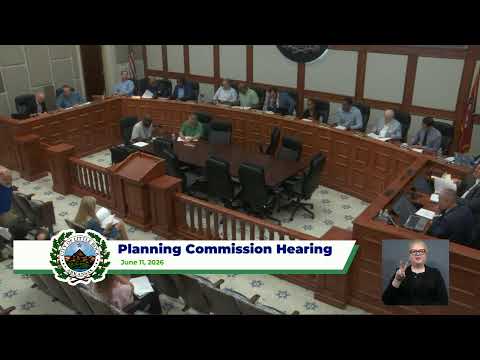
Commission approves several PDR/PCD rezonings amid debate over plan‑development rules and safety standards
Summary
The Planning Commission approved multiple planned district rezoning requests (including Z‑4768‑E and Z‑10283) on June 11, 2026, while Commissioner Russell repeatedly pressed staff to apply submission requirements consistently and raised life‑safety and parking concerns for a townhouse proposal.
The Little Rock Planning Commission voted June 11 to approve a set of rezoning and plan‑development requests — including Z‑4768‑E (Valley Oaks Court conceptual PCD), Z‑10283 (Common Grounds PDR, a revised townhome concept) and a bundle of PDR items (22–26) — after staff defended the use of discretion in conceptual plan‑development reviews and answered commissioners’ questions about fire apparatus access and parking.
Commissioner Russell led the objections and asked the commission to reconsider whether the city is applying planned‑development submission requirements (citing sections 36‑456 and 36‑460) fairly across applicants. “We need to be applying these submission requirements fairly, equitably, and evenly across all applicants,” Russell said, arguing that some applications lacked required site‑plan details, parking, landscaping and building‑orientation information.
Director Jordan and planning staff responded that conceptual plan developments are a longstanding practice and that staff use judgment to request only the materials needed to evaluate a particular application. “We will not bring an application before you unless we feel that we’ve covered all of our bases and are comfortable with giving a recommendation,” Mr. Moore told the commission, and Director Jordan cited staff experience and prior precedent for treating conceptual PCDs differently from full site proposals.
Item 4 (Z‑4768‑E) prompted discussion about whether the application should be a straight C3 rezoning instead of a new planned development. Staff said the property was already under a plan development and that converting via the plan‑development process was more appropriate in this case. The commission approved the item with conditions; Commissioner Russell recorded a dissenting vote for the motion.
Item 6 (Z‑10283) was revised by the applicant from detached single‑family lots to an 18‑unit townhome concept presented by Adam Fogman of Common Ground Properties. Fogman described garages on each unit and an internal circulation design intended to preserve front porches and pedestrian connections. Russell objected to several technical items he said were missing or inadequate: five‑foot setbacks near property lines, driveway aisle widths (one 14‑foot aisle flagged), and an access configuration that may require a variance because of a tight turning radius from East 23rd Street. Staff said the fire department reviewed the proposal and a variance from section 30‑43 might be required to accommodate the driveway flare and ensure apparatus access; staff recommended approval subject to paragraph D and E conditions in the agenda report. The commission approved the PDR as revised; Russell voted no.
Later in the meeting, the commission considered items 22–26 together. Vernon Williams (Garnet Engineering) objected that some materials he submitted were not included in the staff packet displayed to the commission; staff said they review applications based on provided materials and exercise discretion where appropriate. Planning staff also reminded commissioners that case law supports reasonable discretion on submission requirements and that asking for every document listed in the ordinance is not always necessary.
Motions to approve each of the applications or to bundle them for a group vote were made and carried with the staff conditions noted in the agenda packets. Commissioners agreed to revisit plan‑development submission requirements at an upcoming zoning subcommittee/ordinance revision meeting.
The decisions were procedural and zoning‑focused: approvals tied developments to staff conditions and, where necessary, left variances or detailed engineering review to the building‑permit and fire‑review processes.