Get Full Government Meeting Transcripts, Videos, & Alerts Forever!
Get email alerts on the Election Administration topic
No spam. Unsubscribe anytime.
Utah County clerk Aaron Davidson pushes for more election transparency, tightens ballot handling practices
Summary
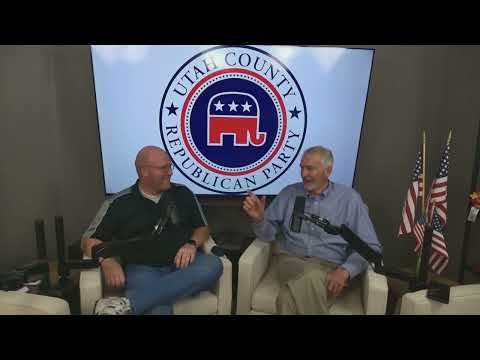
On a Utah County Republican Party podcast, Utah County Clerk Aaron Davidson described steps his office has taken to boost transparency — including publishing cast vote records, opening post‑election audits to the public and expanding dropbox controls — and outlined proposals he wants lawmakers to adopt.
On a recent Utah County Republican Party podcast, Aaron Davidson, Utah County clerk and candidate for reelection, outlined a platform centered on election transparency and practical changes to how ballots are handled and verified.
Davidson said one of his priorities is wider publication of cast vote records, which he described as an anonymized spreadsheet that lists how each ballot was marked. "The cast vote record is basically... it's an Excel file that has a line for every single ballot and what was cast on that ballot," he said, adding that publishing that file lets independent observers check tabulation totals.
Why it matters: Davidson framed the push as a way to restore public confidence in mail‑in balloting and tabulation. He told host Charles Maxwood he worked with legislators on legislation (discussed on the show as HB263) to allow county clerks to post cast vote records. He said Utah County published cast vote records last year and uses public post‑election audits to give residents direct access to checks of machine tabulation.
Davidson described expanding public participation in the statutorily required 1% audit by inviting community members to select additional batches to be audited on the spot. "We brought in the public to do that audit and then my staff would just kind of oversee that it's done properly," he said, describing one earlier finding where a faint pencil mark caused a machine read discrepancy.
On in‑person validation and FastCast: Davidson defended the county's FastCast model — voters complete ballots at home and bring them in for ID‑based validation — saying it shortens wait times and strengthens chain of custody when properly implemented. He acknowledged an early operational error (19 ballots were not properly checked in) and described procedural fixes, including requiring the ballot envelope and stamping validated ballots before they are placed in a separate bag for processing.
Chain of custody and dropboxes: Davidson contrasted the county’s QR‑scanned, camera‑recorded dropbox handling with the uncertainty of mailed ballots. He described serialized zip ties and two‑person pickup procedures verified at the processing center, and noted the county’s decision to stop paying return postage to encourage dropbox use increased dropbox returns from about 62% to about 87%, saving roughly $110,000 in postage, according to Davidson.
Signature verification and ID digits: Davidson recounted a rollout under state law (referred to in the interview as HB300) that incorporated the last four digits of an ID into verification. During an optional phase, his office tracked instances where the four digits matched but signatures did not; he said his staff logged about 780 such envelopes and pressed legislators to reinstate signature matching as a required condition (the change discussed on the show as SB194). Davidson characterized the temporary rule as creating an opening for improper ballots and said he urged lawmakers to ensure both signature and ID checks apply.
Public recommendations and next steps: Davidson said his next‑term goals include encouraging the legislature to require (change 'may' to 'shall') county publication of cast vote records, speeding verification of citizenship status on the voter roll (work connected to HB209 as discussed in the interview), and giving clerks more options for in‑person ballot receipt outposts ahead of election day. "If you want your ballot counted, find our dropbox," he said, summarizing his emphasis on chain of custody.
Davidson provided contact information on the podcast for voters seeking more detail about his record and campaign: davidsonclerk.com, Venmo: Davidsonclerk, email aaron@davidsonclerk.com, and a phone number he gave on air.
Ending: Davidson framed his approach as iterative: try pilot processes (like FastCast), fix operational issues, and take successful practices to the legislature so they can be codified. He said his office would continue to balance access and security while seeking statutory clarifications that would make county‑level transparency practices consistent across Utah.