Get Full Government Meeting Transcripts, Videos, & Alerts Forever!
Get email alerts on the Land Use And Development topic
No spam. Unsubscribe anytime.
Resident questions RISE loan and urges council to consider UDO protections for AI data centers
Summary
A resident raised questions about a past RISE loan used for a shell/spec building and public anxiety over proposed AI data centers, apologized for a prior outburst, and asked councilmembers to publicly support adding protective language for data centers to the Unified Development Ordinance; councilmembers varied in response, with at least one saying he opposed hybrid AI facilities and several encouraging expert review and UDO updates if warranted.
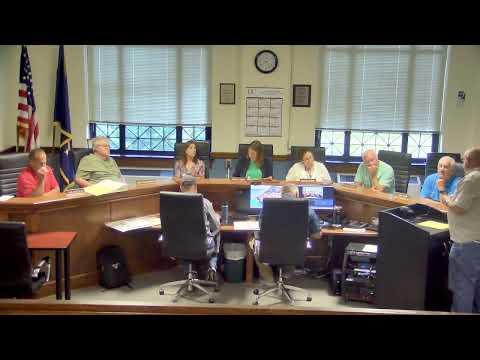
During public comment on June 8, resident Nolan asked the council about a historical loan tied to the RISE board that funded a spec/shell building (figures in public discussion suggested roughly $1.4'— million). Council members said the loan was entered into in a prior period, funds were used for construction of the shell building and repayment is contractually tied to sale; council members indicated they did not have the original documents on hand but said repayment had not yet occurred and that the loan had been structured without interest.
Nolan then offered a public apology to Councilman Weir for a prior heated exchange and said his goal was to lower community tensions about a proposed AI data center project. He asked whether council members would support adding "strong and clear" protective language specific to AI/data centers in Vermillion County's Unified Development Ordinance (UDO) as a symbolic reassurance to residents worried about water use, power demand, noise and property values. Nolan said he was not asking the council to regulate technical details but sought public statements of support for safeguards and stronger UDO language.
Council responses varied: some council members said technical regulation and ordinance drafting were best left to planning staff, legal counsel and the bodies that manage the UDO and permitting process; others said they expected professional review and a fair process. Councilman Weir said he is not supportive of hybrid facilities and said he would have a hard time supporting an abatement for such projects in his district. Several members said they had previously scrutinized large projects (including recent solar proposals) and expected similarly thorough review of any data-center application. Council members also clarified that the RISE entity operates with some independence but that certain financial or abatement approvals would require council involvement.
The council did not take action on UDO text at the meeting; multiple members encouraged continued public engagement and asked staff to continue educating the board about data-center technical issues and potential mitigation strategies before any ordinance changes.