Get Full Government Meeting Transcripts, Videos, & Alerts Forever!
Get email alerts on the Local Food Access topic
No spam. Unsubscribe anytime.
Bangor residents and faith groups push for a single, up-to-date list of food pantries and meal sites
Summary
Residents and local organizers discussed gaps in keeping pantry and meal schedules current, promoted Faith Linking In Action's calendars and QR codes, and proposed printed cards and keychain resources to make help easier to find for people without reliable internet.
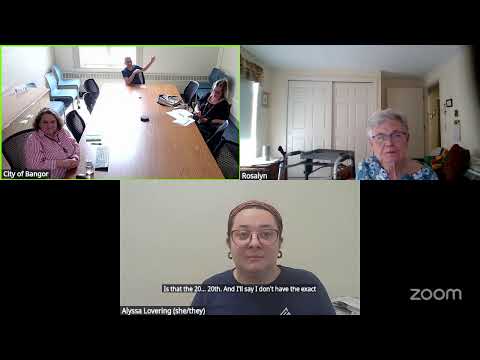
At a Bangor community meeting, residents and local organizers pressed for a single, easily accessible list of food pantries, meal sites and schedules for downtown and surrounding areas.
"Is there a resource or a place where... there's a list of where people can go to food pantries and when they're open?" asked Dominic Rizzo, who identified himself as a resident of Bangor. He said a short, printable list would be useful for people encountered on the street who need immediate help.
Roz Fisher, a member of the food justice committee with Faith Linking In Action, said her committee created calendars and QR codes for food pantries and meal sites and has posted those resources at multiple community access points. "They're at the transportation center. It's at the library. It's many, many places," Fisher said; she also described the First United Methodist Church community meal, which she said serves at least 120 free meals every Thursday from 4 to 6, with no eligibility questions.
Other participants described practical outreach tools. One attendee said Saint Joseph's Hospital and a local business called the Dreamer Cafe distribute keychain cards with resource listings; community case managers and Durkin Center staff reported using Faith Linking In Action's lists because they check update frequency. Meeting participants repeatedly cautioned that no single list is perfectly current: providers must respond to periodic surveys, and calendars can diverge.
Speakers proposed short-term steps: publish a concise pamphlet or business-card-sized resource with a clear update date, post QR codes at transit hubs and libraries, and coordinate between Faith Linking In Action, Full Plates and local institutions to reduce duplication. Salomonosier (the state coordinator) offered to circulate statewide maps and links and to add local contacts to her office's resource distribution.
Why it matters: People seeking immediate food help often lack time or internet access; a durable, portable printed resource and better coordination between providers could reduce failed referrals and duplicate work.
Participants agreed to continue coordination and to share links and contact information by email after the meeting.