Get Full Government Meeting Transcripts, Videos, & Alerts Forever!
Get email alerts on the Licensure Education Policy topic
No spam. Unsubscribe anytime.
Licensing board debates tougher experience rules for foreign and non‑ABET degrees
Summary
Board members debated and provisionally agreed on clearer education and experience rules: require NCES evaluation of foreign degrees, set ABET/AET‑equivalent four‑year engineering degrees to six years acceptable U.S. experience, and set a default eight‑year requirement for non‑ABET/non‑AET or foreign degrees lacking equivalence, with master's/PhD offsets and a 48‑credit engineering threshold.
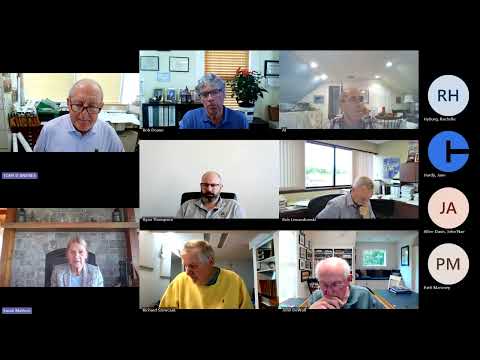
Rob Lewendowski presented a revised evaluation worksheet and urged the board to clarify how it assesses foreign, non‑ABET and technology degrees for engineering licensure. He proposed three main changes: require degree evaluation by NCES, define experience as "acceptable engineering experience working under U.S. codes, specifications and regulations," and set default experience thresholds to give applicants and reviewers predictable guidance.
"At the end of the day, I almost think we could probably work within what's in regulation now," Rob said as he walked the board through his C1 edits. He argued the language should explicitly treat a four‑year ABET/AET‑equivalent engineering degree as the baseline with six years of acceptable experience under U.S. codes, while non‑ABET or non‑equivalent foreign degrees should carry a premium — Rob suggested eight years — to ensure applicants have sufficient U.S.‑relevant practice.
John De Wolf and other members focused on operational clarity. John recommended requiring NCES evaluations of foreign degrees so the board can rely on a consistent external assessment, and he argued the board should keep the phrase "acceptable engineering experience working under U.S. codes, specifications and regulations" so that experience performed abroad under U.S. codes would still be credited. "If you happen to work with those codes and regulations somewhere else, then you're still achieving in my mind the intent," John said.
The members discussed how to treat engineering technology curricula (ETAC) and non‑ABET programs. Several members agreed technology degrees should generally require more post‑degree experience; the group favored concrete, uniform defaults (for example: ABET/AET equivalent = 6 years, non‑ABET/non‑equivalent = 8 years) while preserving the board's regulatory flexibility (6–10 years range) to weigh individual circumstances.
Board members also proposed corresponding adjustments for advanced degrees: a master's would reduce the experience requirement (one year off the relevant baseline) and a PhD would reduce it further. They agreed to adopt a 48‑credit minimum of "board‑acceptable engineering credits" as an administrative threshold, with the board retaining judgment on whether coursework is acceptable for a specific applicant.
Members raised specific edge cases — for example, applicants with strong foreign degrees that lack ABET‑equivalence solely because of humanities credit differences — and discussed an exception pathway if NCES evaluations show near‑equivalence. The board emphasized it will retain discretion to evaluate experience quality and endorsements on a case‑by‑case basis.
The board concluded by asking staff and Rob to draft concrete regulatory language reflecting these defaults and the consistent phrasing (NCES evaluation; "acceptable engineering experience"; US codes/specs/regulations) and circulate the draft for review before a future vote. No formal regulatory change was adopted at the meeting; members voted instead to continue refining the language for formal consideration.
The next procedural step is a circulated draft to the board's subgroup for editing and a return to the full board for final action.