Get Full Government Meeting Transcripts, Videos, & Alerts Forever!
Get email alerts on the Budget Governance topic
No spam. Unsubscribe anytime.
Council adopts FY2026–27 budget after heated debate over expenditure authority and audit of water accounts
Summary
Nogales adopted its FY2026–27 final budget on June 10 after extended debate. Council members pressed for tighter expenditure oversight and for a forensic-style audit focused on water-system accounts; staff described ongoing asset-management mapping and advised coordination so external audits complement, not duplicate, the work.
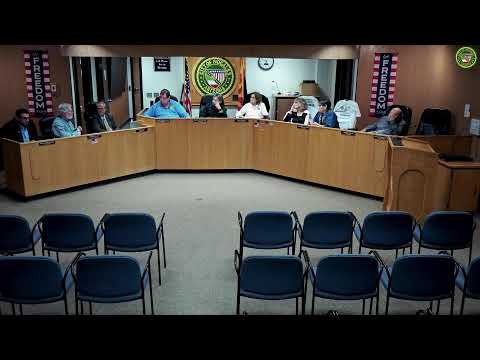
The Nogales City Council approved the city’s final FY2026–27 budget at a June 10 special session, after a lengthy discussion about internal controls, procurement thresholds and whether to commission an outside, more in-depth audit focused on water-system accounts.
Councilmember John Doyle (referred to in the meeting as Mr. Doyle) criticized past purchasing and expressed concern about apparent unauthorized orders and unpaid or unmetered water connections. He pressed for more frequent reporting and for lowering the city manager’s approval authority from $100,000 to $50,000 so the council would see more expenditures. City staff and legal counsel responded that the procurement code already requires manager sign-off for expenditures above $10,000 and that many necessary maintenance items (tank repairs, arsenic media, pump repairs) routinely exceed $50,000. Staff recommended maintaining the current threshold for operational flexibility while improving transparency through regular check-register reports and targeted follow-up where issues are identified.
Separately, council debated soliciting firms to perform a specialized audit or forensic review aimed at finding unmetered connections and aligning infrastructure assets to billing accounts. Public Works Director Eric Stewart described an ongoing asset-management effort—creating GIS layers and inventories of valves, manholes, meters and building footprints—and told the council the department plans to deliver a complete data set to consultants by late summer for rate and billing alignment. Staff suggested coordinating any external audit procurement with the asset-management work to avoid duplication of effort and unnecessary expense.
Despite the debate, council moved forward and adopted the final budget (order 2026-06-023). The council also directed staff to solicit pricing and information from firms that provide specialized audit services, but did not immediately contract one. Staff said they will return with proposals, cost estimates and timelines once they have the asset inventory available.
Why this matters: Budget adoption sets the city’s spending limit for the coming fiscal year; debate over authorization thresholds and audit options signals council attention to revenue collection and procurement integrity, especially in the water enterprise fund.
Next steps: Staff will continue the asset-management mapping, provide monthly check-register disclosures to council, and solicit information from audit firms for potential later engagement.