Get Full Government Meeting Transcripts, Videos, & Alerts Forever!
Get email alerts on the Public Finance topic
No spam. Unsubscribe anytime.
Board adopts county budget amid heated questions about legal fees and $532M spending plan; trustees also raise pay for board and superintendent
Summary
The board reviewed the county office 2026–27 budget, debated transparency for large pots of money (consultants, legal fees, materials & supplies), approved the budget and took votes on board and superintendent compensation; trustees demanded follow‑up on legal settlements and more clarity on per‑pupil spending for alternative‑education students.
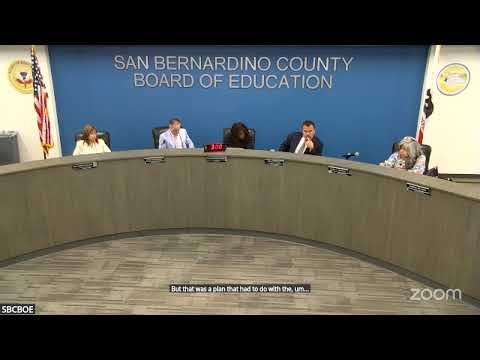
The San Bernardino County Board of Education on June 8 reviewed the 2026–27 County School Services Fund budget and held extended debate before adopting the budget and several compensation actions.
Budget highlights and staff presentation: Internal business officials presented an unchanged County School Services Fund budget since the May workshop: roughly $110.0 million in unrestricted revenues, $106.5 million in unrestricted expenditures, and $42 million in restricted revenues with $425.6 million in restricted expenditures noted in the packet. Staff said May revise proposals from the governor were not included because the final state budget had not been enacted.
Public and board concerns: Commenters and several trustees expressed alarm at the scale of county spending and questioned whether allocations matched student outcomes, particularly for the county’s alternative‑education population. One public speaker called the $532 million figure “a lot of money” for roughly 6,000 students and urged audits of program effectiveness and legal‑fee spending. Board members repeatedly asked for a clearer line‑item breakdown (the “blue pages”) and requested lists of purchase orders, law‑firm invoices and payout object codes used for legal fees—questions staff said they would address in board correspondence.
Legal and procurement scrutiny: Trustees asked whether the county pays litigation and settlement costs from a central pot and whether payment authority had clear board approval across districts. Staff clarified that the superintendent authorizes withdrawals from county treasury accounts on behalf of districts under the established district financial services process but that many of the specific records can be produced for trustees. The board asked staff to check recent litigation lists and law‑firm purchase orders and provide a narrative about settlement processes and joint powers agreements used for legal spending.
Compensation votes: Among the business votes, the board approved a 5% increase to board member compensation (raising the annual stipend to $2,100). The board also approved a cost‑of‑living adjustment to the county superintendent’s base salary (2.47% COLA) with an effective date of July 1, 2026; the board recorded Yeas, Nays and one abstention during the superintendent compensation vote. Trustees debated whether to match the superintendent’s increase to the employee COLA and sought clarity on whether a one‑time $800 payment to staff should be reflected differently.
Budget adoption and conditions: The board approved the 2026–27 budget after motions and readings; members who voted against or abstained cited concerns about transparency and insufficient direct investments in classroom instructional supports. Several trustees asked staff to return with detailed branch‑level spending, clarifications of large accounting categories (for example, a multi‑million dollar materials and supplies line), and the requested documentation on legal fees and settlements.
What the transcript does not show: The meeting record records the requests for documentation and the votes; it does not include subsequent staff materials, audits, or changes to contracts that may follow. The public asked for refunds and audits based on claims about IPC and vendor billing; staff indicated such matters would be pursued via board correspondence and procurement channels.
Next steps: Trustees requested an earlier and more detailed review of branch‑level budget breakdowns and asked staff to return at a future meeting with the requested purchase orders, object‑code detail and narrative about litigation approval processes.